 Amazon Music
 Deezer
 TuneIn + Alexa
 iHeartRadio
 PlayerFM
 Listen Notes
 Podchaser
 BoomPlay
Completing an IPO is not the end journey. It is a checkpoint in a long-term journey for any corporate that wants to tap into funding.
Middle Eastern equity capital markets have captured investors' attention the last 2 years, as the only truly active IPO market in the world throughout 2022 and 2023 - with close to 50 IPOs listing each of those years.
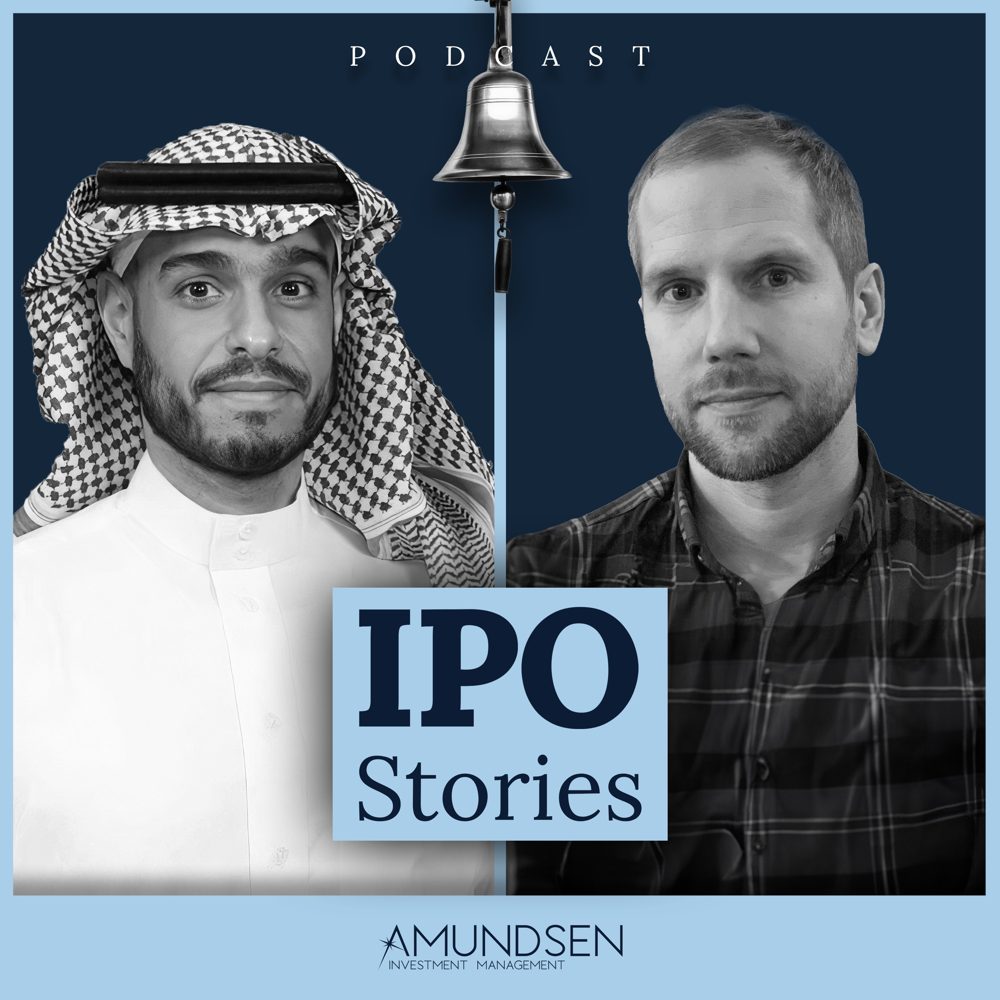
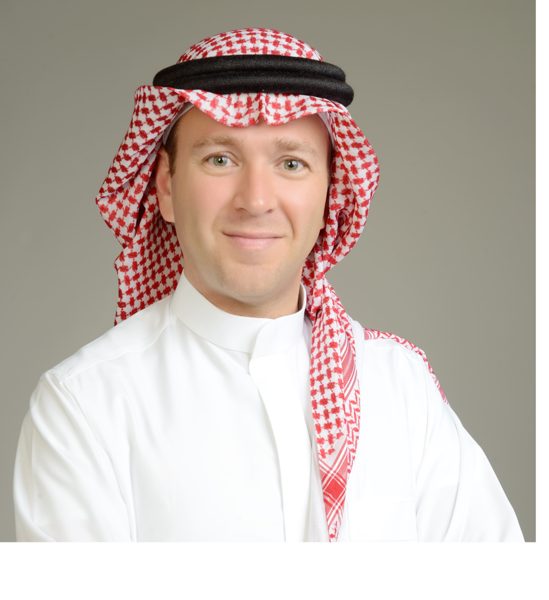
To learn more about GCC equity markets, we are joined by Wassim Al Khatib, the CEO of Lazard in MENA. Lazard is an independent financial adviser, advising companies and their owners on all aspects of corporate finance, including organizing the IPO process. Before Lazard, Wassim was the CEO of Citigroup in Saudi Arabia, and before that the Head of Investment Banking at NCB Capital.
With Wassim, we explore the reforms and opening of GCC capital markets to foreign investors, the IPO activity and diversification of the stock exchange beyond oil & gas, and the question of listing location for local, innovative companies.
If you have feedback, or there are any topics you would like us to cover on the show, please reach out at contact@ipostories.com
Disclaimer: this discussion is not financial advice, nor an investment recommendation, nor a solicitation to buy or sell any financial instruments, or an offer for financial services or any other transaction. The information contained in the recording have no contractual value and are destined for an informational purpose only. Amundsen Investment Management and the participants on this podcast may have holdings in the companies being discussed.
Wassim Al Khatib is CEO of Lazard Financial Advisory for MENA, based in Riyadh, with a career spanning landmark capital markets transactions across the region including a lead role on Saudi Aramco's $29.4 billion IPO. He previously served as CEO of Citigroup Saudi Arabia and Head of Investment Banking at NCB Capital.
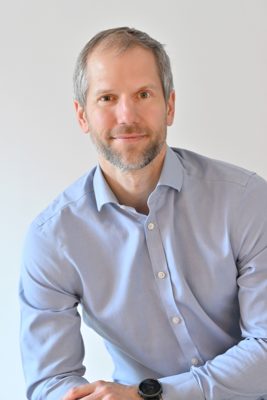

Per is co-founder and CEO of Amundsen Investment Management. Prior to founding Amundsen, Per was Global Head of Equity Enhanced Indexing at Norges Bank Investment Management (the Norwegian Sovereign Wealth Fund), where he oversaw the management of the fund's $700bn equity index portfolio, invested across 9000+ companies globally. Per is an engineer by training, with a Master of Science from Ecole Polytechnique in France and MIT in the US. Per serves as a member of AMF's consultative committee on Disclosures and Corporate Finance, FTSE Russell’s EMEA Regional Advisory Committee, and Euronext Oslo's index advisory committee.
Transcript
Auto-generated
3, 2, 1.
Per Einar Ellefsen: Hello and welcome to IPO Stories, a podcast that explores the paths to IPOs for companies and their stakeholders. Through interviews with professionals who have led companies to public markets, we learn about what it takes to IPO a business—the do’s and don’ts before, during, and after the listing process. I’m Per, co-founder of Amundsen Investment Management, a Europe-based equity manager.
The Middle Eastern equity capital markets have captured investors’ attention over the last two years by being the only truly active IPO market globally throughout 2022 and 2023, with close to 50 IPOs pricing each of those years. To understand more about the GCC equity markets and economy, we’re joined by Wassim Al Khatib, who is the CEO of Lazard in MENA, advising companies and their owners on all aspects of corporate finance, including organizing the IPO process. Before this, he was the CEO of Seder Group in Saudi Arabia and Head of Investment Banking at NCB Capital.
With Wassim, we explore the opening of GCC capital markets to foreign investors, the IPO activity and diversification of the stock exchanges beyond oil and gas, and the question of listing location for local innovative companies. Before we start, we remind listeners that our discussion is not financial advice, nor an investment recommendation, nor a solicitation to buy or sell any financial instruments, or an offer for financial services or any other transaction. The information contained in the recording has no contractual value and is intended for informational purposes only. Amundsen Investment Management and the participants on this podcast may have holdings in the companies being discussed. So Wassim, thank you very much for joining today. Maybe you could start by introducing yourself and Lazard’s role advising companies and owners.
Wassim Al Khatib: Per, it’s a pleasure to be here with you and the rest of the team. Thank you very much for having me on this podcast. I’m Wassim Al Khatib. I am the CEO for the Middle East and North Africa for Lazard. I’m based in Riyadh, Kingdom of Saudi Arabia. I joined the firm exactly a year ago yesterday, so I’m enjoying the first anniversary of what is off to a great start with the firm.
Just to give you a little bit of color, Per: Lazard Financial Advisory focuses on supporting our local and regional clients across the financial advisory and investment banking spectrum.
Those range from advising clients on M&A—including acquisitions, sell-sides, strategic reviews, capital recycling, and sell-downs—as well as branching into equity capital markets (ECM) and debt capital markets (DCM), where we help issuers and selling shareholders of large corporates and government-related entities tap the equity capital markets either through IPOs, rights issues, or monetization of assets and shares via secondary offers—fully marketed offerings, ABBs (accelerated bookbuilds), and other means.
We also advise clients on raising capital for listed companies in the form of rights issues and other structures. We are in the midst of the super-cycle the region is witnessing today, and we are well positioned to put Lazard at the core of supporting the Kingdom and the rest of the GCC—including the United Arab Emirates—to advance their economic transformation plans. It’s a pleasure to support our clients, partners, and regulators.
Per Einar Ellefsen: In terms of timeline, when would you typically become involved in such a process compared to when the bulge-bracket banks get mandated?
Wassim Al Khatib: It’s a very good question—we’re having three conversations right now on exactly this topic. We think involving an independent financial advisor early makes the overall IPO journey much smoother and more robust. Listing is not the end; it’s the start of a company’s new journey as a listed entity—governance requirements, ongoing disclosures, and an active investor-relations program.
Regardless of how profitable or well-funded a business is, there are nuances and processes to prepare for before onboarding underwriters, bookrunners, and legal counsel for detailed due diligence and IPO documentation and marketing. We work closely with management, the board, and board committees to help them understand what to expect and to start preparing.
For example, that can include preparing a five- to seven-year business plan—often not yet formalized. We sit with management (it’s their plan) and provide the financial-advisor perspective on how the plan may translate to equity monetization, how the market may perceive pricing, and whether capital-structure elements should be adjusted ahead of going public and onboarding additional banks.
We also help on initial IPO structuring. If the company needs funding, the IPO can include a primary capital raise, not just a secondary monetization, to ensure the company is well capitalized.
We share experience on listing venues—pros and cons—and which banks have the most relevant credentials for the sector, size, and geography. We help the issuer run the RFP for global coordinators and underwriters, review proposals, conduct management presentations, and recommend the right syndicate to deliver on the IPO objectives. Most of this happens behind the scenes before you onboard the banks to execute.
With that formation package ready, banks have a clear path on timeline, diligence, and information availability. Lawyers then hold the pen on disclosure documents with input from banks and other DD consultants. Management readiness lets the banks immediately start refining the investor presentation, equity story, sizing, and pricing.
Per Einar Ellefsen: The GCC region—and Saudi Arabia in particular—used to be very local equity markets. I remember being an investor in the mid-2010s and it was quite difficult to access. In 2016, the government and regulators started an ambitious program to modernize the stock exchange. Why were these reforms deemed necessary?
Wassim Al Khatib: Absolutely. We need to rewind a bit to understand the structure of GCC economies—particularly Saudi Arabia—prior to Vision 2030.
Historically, as an oil-producing nation, the Kingdom’s revenues were 90%+ from oil. With a growing population and strong fundamentals—geographic position, global connectivity and influence—and many sectors still in early growth, there was an opportunity for a serious reform effort led by His Royal Highness the Crown Prince to activate Vision 2030: diversify away from oil, build a vibrant society, and leverage our strengths.
Part of that was the Financial Sector Development Program (FSDP), launched in 2018 to create a strong, dynamic, and stable financial sector—making the Kingdom a center for capital formation to support private-sector growth, diversify funding sources, and attract foreign capital to support broader diversification.
I’m proud that the Saudi Tadawul Group (the Saudi Exchange) is now among the 10 largest stock exchanges globally by market cap. We’ve also achieved index inclusions and affiliations with MSCI, FTSE, and others. Opening the capital markets is one FSDP angle to opening the economy. The Kingdom has shifted from being a net capital exporter pre-2016 to a balanced exporter and importer of capital, aligned with funding needs for Giga-projects, the 13 strategic sectors announced by the PIF, and Saudi Aramco’s strategies—offering strong opportunities for international investors to participate and be rewarded.
Looking at progress (e.g., end-2023), we’ve increased Qualified Foreign Investors (QFIs) to 3,400+. By 2025 the target is ≥45% of traded volumes from institutions vs. retail—we were around 37% as of December. Foreign ownership is targeted at ~17.5% by 2025; we currently stand at ~13%.
The CMA (Capital Market Authority) and Tadawul have shown that some of the most attractive global IPOs in recent years happened in the Kingdom—foreign participation, strong bookbuilding and aftermarket volumes, and solid post-listing performance—creating a win-win across the ecosystem.
Per Einar Ellefsen: Two things stand out. First, the institutional-volume target (45% vs. 37% today). In Europe retail is very low and increasing retail is a goal—so you’re balancing differently. Second, foreign participation: given deals like ADES (63x covered) or Dubai Taxi (130x), it can look like the region doesn’t need foreign investors. What role should foreigners play?
Wassim Al Khatib: The local investor base is the bedrock of most successful Tadawul IPOs. But like any G20 nation with global ambitions and diversification plans, stock-market strength reflects economic strength. With robust fiscal metrics, reasonable debt-to-GDP, strong reserves at SAMA, and a decisive Vision 2030 plan—plus improved regulation and high disclosure standards—there’s no reason not to deepen global participation.
Strategically, stronger global participation puts the exchange on the map and opens avenues like future cross-listings—Saudi companies abroad and vice versa. Remember: an IPO is a checkpoint, not the finish line. Future capital raises and sell-downs benefit from established relationships with global investors. And the sheer scale of Vision 2030 investment—PIF, Saudi Aramco, MoF, and private sector—benefits from foreign participation, whether FDI, QFI, or swaps.
Per Einar Ellefsen: Which comes back to what stock markets are for—raising capital for ambitious projects.
Wassim Al Khatib: Absolutely. And better disclosure, governance, and strong business models in equities also build relationships for international bond issuance later—familiarity matters.
Per Einar Ellefsen: On reforms—were any particularly challenging? And are there further steps to integrate more with global markets?
Wassim Al Khatib: I wouldn’t call them “challenging” so much as requiring laser-focused execution by the exchange, CMA, and the ecosystem—building infrastructure, upgrading regulations, benchmarking to global standards. Every market is different: we should learn from others, but ultimately do what works here for diversification and attracting FDI and foreign portfolio flows.
A lot focused on transparency and disclosure. Saudi prospectuses are high-quality, giving investors, rating agencies, and brokers sufficient information on diligence, business model, profitability, governance, and continuing obligations.
The listing journey has also matured. Pre-2017, IPOs per year were scarce. Today, between announced and executed, we see double-digit IPOs annually across the Main Market and the Nomu (the parallel market). Regulations are clearer; roles and responsibilities for issuers, banks, and lawyers are well defined.
Naturally, some transactions won’t meet standards—quality, disclosure, information—and shouldn’t proceed. The clarity and transparency have facilitated a larger deal flow.
Another key evolution—activated around the Aramco IPO—was enabling a more international pre-listing process. Previously, investors had little information until CMA approval and announcement. Today, as in global markets, issuers (through advisors) can run early-look meetings to familiarize investors with the company and test reactions on valuation, sizing, and timing—subject to regulatory principles. This wasn’t practiced before; now it aligns with international norms.
Per Einar Ellefsen: A related topic: block sell-downs and capital raises for listed companies. We’ve seen two large ones: Saudi Telecom (2021) and Tadawul last year. Any regulatory changes?
Wassim Al Khatib: Correct—the two notable capital-recycling/secondary transactions were stc’s follow-on and the Tadawul ABB. Historically there wasn’t a dedicated rule-set for these, but market and regulator experience on those deals helped shape a framework for future transactions to obtain approvals. I expect clearer sub-regulations under the capital-markets regime, adding transparency and comfort to the process.
Per Einar Ellefsen: The GCC was essentially the only functioning IPO market globally the last two years—48 IPOs in 2022 and about the same in 2023. What drives it from here—more privatizations like Salik, Dubai Taxi, Empower, etc., or more private actors choosing to list?
Wassim Al Khatib: Multiple factors drive “go/no-go.” Recent deal track records matter—Abu Dhabi and Riyadh IPOs have performed extremely well, ranking among global leaders on post-listing performance. Macro matters too: liquidity, inflation, interest rates. We’re in a high-rate environment; central banks are working to tame inflation without stifling growth—especially important for fiscally weaker economies.
Global markets are interconnected. A healthy U.S. IPO market influences sentiment and liquidity across Europe; similarly within Asia. For issuers here, the execution window is critical—and you only catch it if you’re ready. An IPO can take 6–24 months depending on size, complexity, and readiness.
The GCC has been an exception to dormant Western markets, thanks to strong fiscal positions (UAE, KSA), IPO performance, serious diversification, and starting from a lower base of market development—offering upside. But pricing and book size are still influenced by global macro and geopolitics (China–U.S., regional tensions). The bid/ask dialogue is more sophisticated; banker quality and issuer preparation are paramount—tell the story well, price fairly, and leave something on the table. We’re bespoke, not insulated.
With the right teams and issuers, I expect continued upside in deal count and successful outcomes in the Gulf—especially KSA and Abu Dhabi.
Per Einar Ellefsen: On global listings: some GCC issuers have listed abroad—Network International in London, for example. Saudi tech names may think about the U.S. given its tech depth. How are companies thinking about listing location?
Wassim Al Khatib: We’ve had many behind-the-scenes discussions on listing abroad or dual-listing. It’s worth exploring for companies with global ambitions in a given geography—listing there can build brand and investor familiarity. But the reverse also happens.
You mentioned ADES. Historically it was listed in London. Liquidity and IPO performance there have been debated, and ADES generated the majority of revenues in the region, especially KSA. Being listed far from your operations and clients—especially in energy services—creates a disconnect. The solution—delisting in London, reorganizing, relocating HQ to Saudi, and relisting locally—was very successful.
Outcomes: (1) strong recognition for localizing a key segment of the oil & gas value chain; (2) deep investor familiarity (local and international) with KSA energy fundamentals; (3) enthusiastic book coverage, trading volumes, premium pricing, and post-IPO value creation. Choosing a venue shouldn’t be only about liquidity—it’s also about bringing the story to investors who understand and value it.
We’re starting to see more companies aiming to list in Riyadh and Abu Dhabi, including relistings from Asia or Europe.
Per Einar Ellefsen: On going to the U.S.: being a tech company alone isn’t enough—you need real business there. Being close to customers and investors who “get” you is often better. On sector mix—many think GCC equals oil & gas. Aramco is the behemoth, and there are petrochemicals and services—but there’s much more: clean energy, healthcare, consumer tech. How diversified is the listing space?
Wassim Al Khatib: Great question. Historically, pre-2017/2019, Tadawul blue chips were largely chemicals and financials. Today it’s far more diverse: education, retail, energy services (e.g., Arabian Drilling, ADES), tech like Jahez—which moved from Nomu to the Main Market—validating venture-capital success and exits. The PIF is investing heavily in EVs, tourism, entertainment, fintech; and ahead lie clean energy (e.g., hydrogen), NEOM, and more.
Think of it as a pipeline. Today’s IPOs are already diverse, and over 5–10 years, the capital sown under Vision 2030 should produce a healthy pipeline in future sectors—clean energy, AI, EVs, batteries—broadening opportunities for local and international investors. It’s an exciting trajectory.
Per Einar Ellefsen: Thank you very much, Wassim—thanks for joining us today.
Wassim Al Khatib: My pleasure, Per. I’m always available to you and your colleagues. I thoroughly enjoyed this and hope you found it useful.
Per Einar Ellefsen: Thank you for listening to IPO Stories. In future episodes, we’ll host CEOs, CFOs, advisors, and other participants in the IPO process to learn from their experience—like from Wassim today. If you like the show, please follow us on Spotify or Apple Podcasts and share it with people around you. If you have questions about the IPO process that you’d like us to address with future guests, please get in touch at contact@ipostories.com and follow our LinkedIn account, Amundsen Investment Management S.A.