 Amazon Music
 Deezer
 TuneIn + Alexa
 iHeartRadio
 PlayerFM
 Listen Notes
 Podchaser
 BoomPlay
We spoke to corporates in the Kingdom, especially family businesses, and they were asking us "you are asking us to go public, why aren't you?
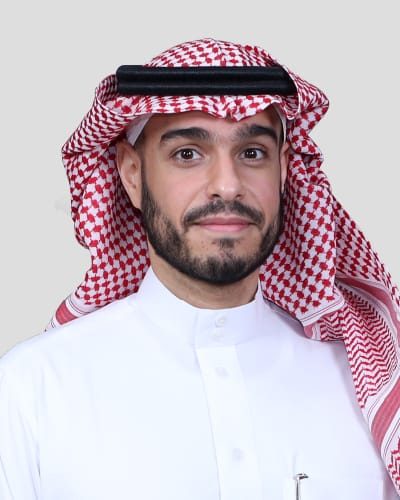
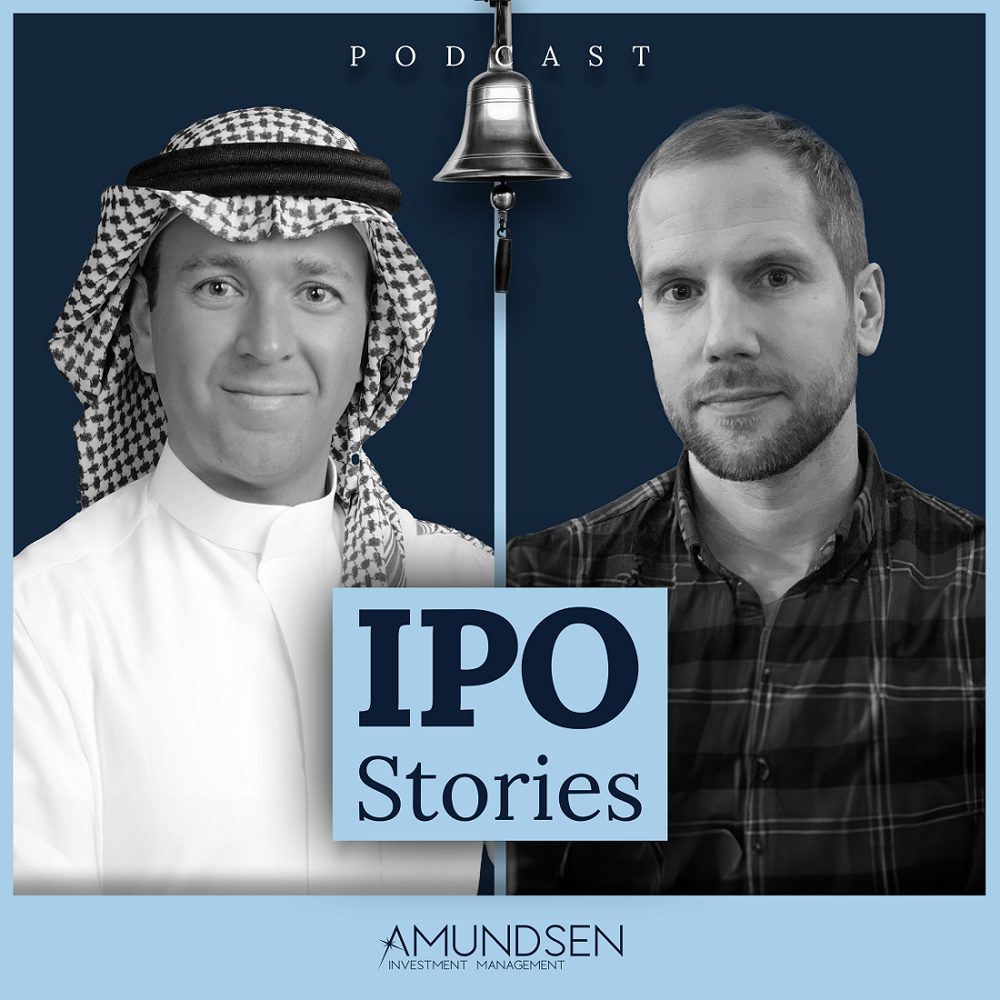
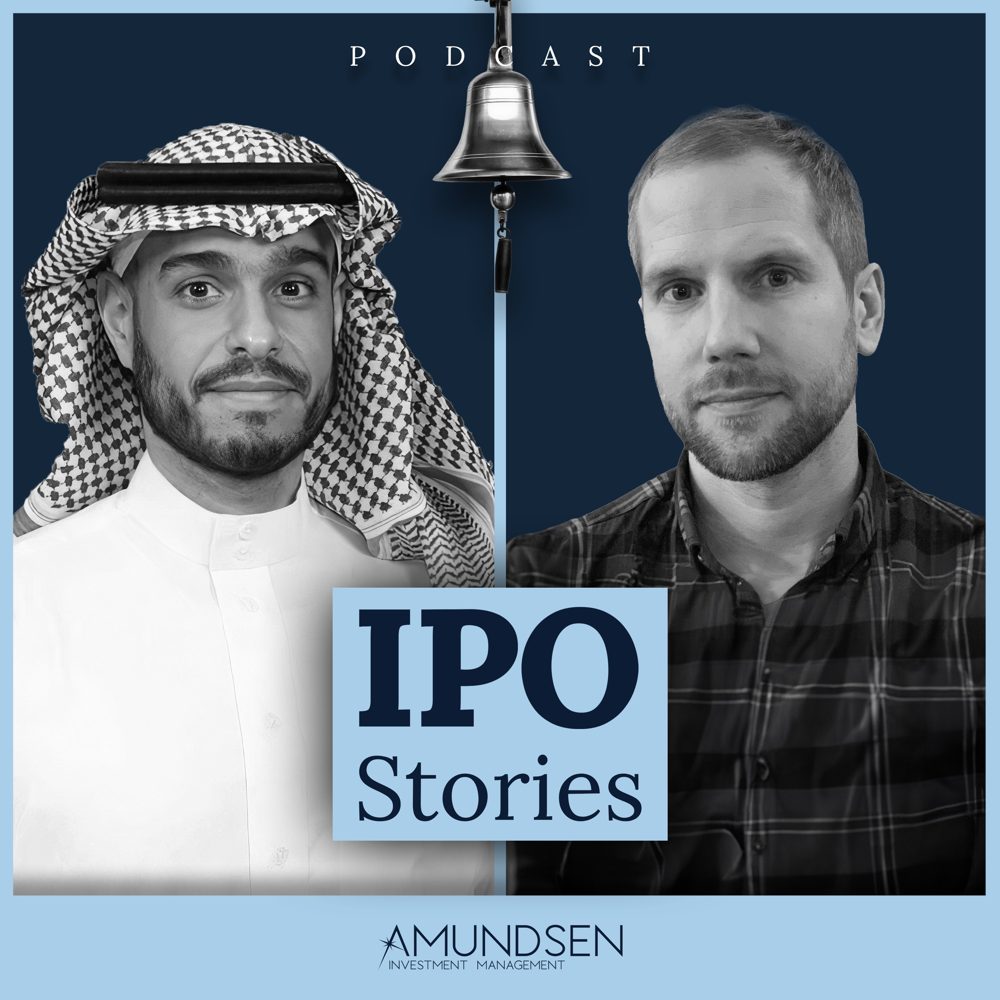
Saudi Arabia has evolved from having 4 IPOs per year 10 years ago, to 40 IPOs per year over the last few years. Nayef Al Athel has been in the middle of this evolution, as he headed the listings activity at the Saudi Exchange between 2018 and 2023.
With Nayef, we discuss the policy decisions and incentives that have made Saudi Arabia one of the most active IPO markets globally, how going public has affected the strategy of the Tadawul group, the internationalization of the exchange, and the road ahead for the Saudi capital markets.
If you have feedback, or there are any topics you would like us to cover on the show, please reach out at contact@ipostories.com
Disclaimer: this discussion is not financial advice, nor an investment recommendation, nor a solicitation to buy or sell any financial instruments, or an offer for financial services or any other transaction. The information contained in the recording have no contractual value and are destined for an informational purpose only. Amundsen Investment Management and the participants on this podcast may have holdings in the companies being discussed.
Nayef Al-Athel is the former Chief of Listing at the Saudi Exchange, where he headed the exchange's listings activity between 2018 and 2023, overseeing more than 300 listings worth over SAR 250 billion across equity, debt, ETFs, and REITs. He is now Group Chief Sales and Marketing Officer at Saudi Tadawul Group.
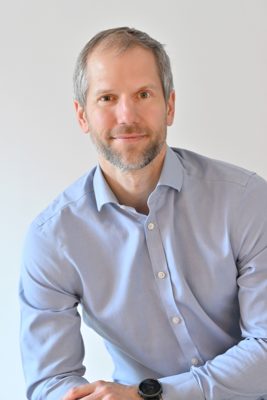

Per is co-founder and CEO of Amundsen Investment Management. Prior to founding Amundsen, Per was Global Head of Equity Enhanced Indexing at Norges Bank Investment Management (the Norwegian Sovereign Wealth Fund), where he oversaw the management of the fund's $700bn equity index portfolio, invested across 9000+ companies globally. Per is an engineer by training, with a Master of Science from Ecole Polytechnique in France and MIT in the US. Per serves as a member of AMF's consultative committee on Disclosures and Corporate Finance, FTSE Russell’s EMEA Regional Advisory Committee, and Euronext Oslo's index advisory committee.
Transcript
Auto-generated
3, 2, 1.
Per Einar Ellefsen: Hello and welcome to IPO Stories, a podcast that explores the paths to IPOs for companies and their stakeholders. Through interviews with professionals who have led companies to public markets, we learn about what it takes to IPO a business—the do’s and the don’ts before, during, and after the listing process.
I’m Per, co-founder of Amundsen Investment Management, a Europe-based equity manager.
Saudi Arabia has evolved from having four IPOs per year a decade ago to around forty per year in recent years.
Nayef Al-Athel has been at the center of this evolution. He headed Listings and IPO Activity at the Saudi Exchange between 2018 and 2023. He is now Chief Sales and Marketing Officer of the Saudi Tadawul Group, which owns the Kingdom’s equity-market infrastructure and went public itself in 2021.
With Nayef, we discuss the policy decisions and incentives that have made Saudi Arabia one of the world’s most active IPO markets, how going public affected the strategy of the Tadawul Group, the internationalization of the exchange, and the road ahead for Saudi capital markets.
Before we start, we remind listeners that this discussion is not financial advice, nor an investment recommendation, nor a solicitation to buy or sell any financial instruments. The information contained in this recording is for informational purposes only. Amundsen Investment Management and the participants in this podcast may have holdings in the companies discussed.
Nayef, thank you very much for joining us today.
Nayef Al-Athel: The pleasure is all mine.
Per Einar Ellefsen: Can you start by introducing yourself and explaining your role at the Saudi Tadawul Group?
Nayef Al-Athel: Of course. By training I’m an investment banker—I started my career at Morgan Stanley and experienced what it’s like working for a Wall Street bank. Then, inspired by the Vision 2030 momentum, I joined the Saudi Stock Exchange, as it was known then.
We later rebranded to Saudi Tadawul Group, and I’ll come back to that. I joined with the mission to reshape the Kingdom’s capital markets—and as a young Saudi, it’s been an incredible journey.
During that period, we launched the SME market (which has financed over 100 companies), introduced REITs, joined global emerging-market indices, and achieved many other milestones that put Saudi Arabia on the global stage.
I served as Chief of Listings, responsible for IPOs—my professional bread and butter. Today, as Chief Sales and Marketing Officer of the group, I’m focused on strengthening our commercial output across our seven subsidiaries.
Per Einar Ellefsen: When we first met in 2021, you were managing the Tadawul Group IPO. I was surprised that the exchange itself wasn’t listed earlier—many exchanges list early to showcase their market. Why 2021?
Nayef Al-Athel: The desire to list was always there. We felt IPO-ready six or seven years before, but as you know, the Public Investment Fund (PIF)—our main shareholder—had many priorities and a full pipeline of privatizations.
That delay actually worked in our favor. It allowed us to restructure into a group before going public.
Instead of a single exchange, we formed Saudi Tadawul Group, owning:
Saudi Exchange (the trading venue),
Edaa (the securities depository center),
Muqassa (the clearing house), and
Wamid (our technology and innovation arm).
This gave us a diversified equity story, a stronger structure, and a resilient post-IPO stock performance.
Per Einar Ellefsen: What was the strategic rationale behind the IPO?
Nayef Al-Athel: Several reasons. First, we wanted to lead by example. For years we encouraged family businesses to go public, and they’d ask, “Why aren’t you public?”—a fair question.
Second, we wanted the Tadawul Group IPO to set a gold standard for transparency and execution in the Kingdom. Transparency was one of our guiding principles throughout the process.
Third, the IPO helped us share our growth story with both local and global investors. And finally, our shareholder, the PIF, had strategic objectives—monetizing assets to reinvest in the Kingdom’s growth, consistent with Vision 2030.
Per Einar Ellefsen: You’ve worked with both global and local banks, and you came from Morgan Stanley. Did your perception of the process change once you were inside it?
Nayef Al-Athel: Absolutely. Over the past decade, the Saudi IPO process has evolved tremendously.
Where regulators used to make most of the decisions, today corporates have far greater autonomy—supported by financial advisers and investor feedback.
From my position, I’ve seen local and international banks both evolve quickly to keep pace. In just six years, we’ve completed over 150 IPOs—a steep but rewarding learning curve for everyone involved.
The Tadawul Group IPO was one of the most humbling experiences of my life. The hardest part wasn’t dealing with regulators—it was managing investor expectations.
Per Einar Ellefsen: Were you able to figure out what those expectations were?
Nayef Al-Athel: Not really! From the pre-deal investor education all the way to allocation, you never truly know. Every question and every answer matters, and word travels fast across the investor community. It’s like one large conversation—you must be flawless in your messaging.
Per Einar Ellefsen: It’s true—you’re effectively negotiating with hundreds of investors at once. You also dealt with international and local investors, including retail participants. How did that differ?
Nayef Al-Athel: It’s the land of the poker face—you never know what investors are really thinking!
Local investors generally had greater familiarity and appreciation for who we are. International investors, on the other hand, asked deeper strategic questions—and those discussions helped us refine our long-term vision.
Per Einar Ellefsen: Part of your equity story was moving from a local exchange to a diversified group. What’s the strategy behind that?
Nayef Al-Athel: It’s twofold.
First, we wanted to build world-class capital-market infrastructure—separate, autonomous entities with their own governance and capitalization: Saudi Exchange, Muqassa, and Edaa.
Second, we aimed to globalize. That structure makes us more attractive to international investors. Through our Qualified Foreign Investor (QFI) program, we’ve onboarded most of the world’s largest asset managers.
We’re now working toward becoming a cross-listing hub between East and West, expanding through data and commodities acquisitions as part of a broader non-organic growth strategy.
Per Einar Ellefsen: You led listings through a major transformation—from four IPOs per year to forty. What drove that surge?
Nayef Al-Athel: When I joined, we averaged just four or five IPOs annually. Then came Vision 2030, spearheaded by the Crown Prince. He viewed capital markets as a national accelerator—a key driver of diversification and growth.
That directive translated into clear KPIs: grow listings from 4 to 20 to 40 to 60. Many thought it was unrealistic—until we did it. Now, 20 or 30 a year feels too low.
Per Einar Ellefsen: Was the focus mainly on financing, or on improving governance?
Nayef Al-Athel: Both.
On one hand, IPOs provide access to capital. On the other, listing enforces governance, continuity, and transparency—improving decision-making and corporate resilience.
Per Einar Ellefsen: How do you convince companies—especially family-owned ones—to list?
Nayef Al-Athel: Education and incentives.
Eight years ago, many companies didn’t understand why or how to go public. Now awareness is much higher, thanks in part to government incentives.
For example, listed companies receive preferential treatment in government procurement if bids are otherwise equal—because of their governance and transparency.
Another incentive: easier access to government development funds (tourism, industrial, etc.), which often favor listed companies.
Per Einar Ellefsen: Interesting—those are powerful incentives. Disclosure requirements are often a concern for companies. How have you handled that, especially for SMEs?
Nayef Al-Athel: We adjusted requirements for smaller firms. On Nomu, our SME market (“Nomu” means growth in Arabic), companies report semi-annually instead of quarterly, giving them breathing space.
We also introduced direct listings, which, combined with lighter disclosure, made Nomu far more accessible.
Per Einar Ellefsen: And for international investors—access to the Saudi market used to be quite hard. How has that changed?
Nayef Al-Athel: Completely transformed. A decade ago, foreigners accessed the market through swaps and P-notes, which were costly and inefficient.
Now, through the QFI program, international investors trade almost as seamlessly as locals, supported by top-tier technology and infrastructure.
This evolution helped us secure emerging-market status in major global indices.
Per Einar Ellefsen: And disclosure standards?
Nayef Al-Athel: Saudi has long been among the most transparent markets globally. The World Bank’s 2023 governance report ranked us in the top three for corporate governance. Maintaining that standard is central to our value proposition for investors.
Per Einar Ellefsen: What about ESG disclosure?
Nayef Al-Athel: ESG is a growing focus. Our Saudi Exchange ESG team is driving initiatives to help corporates improve disclosure, and we’re also leading by example as a group.
It’s a journey—like investor relations was a few years ago. When I first joined, IR functions were rare; now they’re integral.
Events like the Saudi Capital Market Forum have become major platforms for corporate access—we’re taking 30 Saudi corporates to Hong Kong next May, for instance.
ESG will follow a similar trajectory—steady, structured progress each year.
Per Einar Ellefsen: One goal of the Financial Sector Development Program is to broaden shareholder bases. Has that worked?
Nayef Al-Athel: Partially.
We’re still a retail-dominated market, but we’re steadily institutionalizing—through IPO allocations, asset-management growth, and regulatory reforms.
Our “Invest Wisely” initiative promotes financial literacy and long-term investing.
Free float levels are high—among the top decile globally—and follow-on offerings are helping expand that further.
Per Einar Ellefsen: Follow-on offerings were once difficult to execute in Saudi. How is that evolving?
Nayef Al-Athel: It’s improving rapidly. We experimented, learned, and then the Capital Market Authority issued clear regulations last year. We reached maturity fast because follow-ons are crucial for deepening liquidity and enabling gradual exits for investors, such as private equity or venture backers.
Per Einar Ellefsen: Speaking of cross-listings—after Americana’s dual listing between Saudi and the UAE, what comes next?
Nayef Al-Athel: Cross-listings are complex—they require regulatory harmonization and technical integration between markets. Think of it as building a digital bridge with automated clearing and settlement. It takes time, but once built, it’s seamless.
Several of these “bridges” are nearing completion, and once operational, they’ll position Saudi Arabia as a true East-West capital-market connector.
Per Einar Ellefsen: Which future listings or sectors excite you most?
Nayef Al-Athel: I’m proud of how we’ve diversified listings beyond petrochemicals and banks.
Over the last five years, we’ve added healthcare, education, and e-commerce. Going forward, I’m eager to see tourism, entertainment, gaming, and sports companies list—sectors that reflect the new Saudi economy.
As a big sports fan, I’d personally love to see Saudi sports institutions go public one day—it would be historic, even if football clubs aren’t usually the easiest listed companies!
Per Einar Ellefsen: Any fun facts from the Tadawul IPO for future issuers?
Nayef Al-Athel: Maybe not a fun fact—but advice: stay calm and patient. IPOs are intense. There’s no room for delay; every slip feels magnified. But staying composed and focused is key—especially when you’re the stock exchange itself!
Per Einar Ellefsen: Thank you very much, Nayef, for joining us today.
Nayef Al-Athel: Thank you, Per. It was a pleasure.
Per Einar Ellefsen: Thank you for listening to IPO Stories. In future episodes, we’ll host CEOs, CFOs, advisors, and other participants in the IPO process to learn from their experiences—like from Nayef Al-Athel today.
If you enjoy the show, please follow us on Spotify or Apple Podcasts and share it with others. For questions about the IPO process you’d like us to address with future guests, email contact@ipostories.com and follow Amundsen Investment Management on LinkedIn.
Nayef Al-Athel: Saʿūdī ʾArabīyah saʿīdah (“Long live Saudi Arabia”).