 Amazon Music
 Deezer
 TuneIn + Alexa
 iHeartRadio
 PlayerFM
 Listen Notes
 Podchaser
 BoomPlay
One of the biggest conundrums with being a publicly listed company is the cost of capital. Many shipping companies have done this wrong every cycle, where they buy ships at the market peak and then must fire sale them when the market slumps
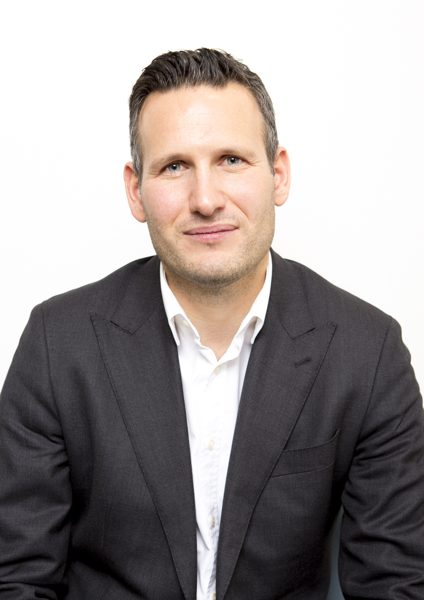
Øystein Kalleklev is the CEO of not one, but 2 listed companies: Flex LNG and Avance Gas, two leading shipping companies in Liquefied Natural Gas (LNG) and Liquefied Petroleum Gas (LPG), both listed on Euronext Oslo.
Øystein shares his experience steering these companies through volatile market conditions and his rationale behind dual listing Flex LNG in the US in 2019. With Øystein, we discuss what being listed means for these companies, the technological evolutions in shipping, the challenges and opportunities of the energy transition, addressing methane emissions, and the broader implications for the shipping industry.
Disclaimer: this discussion is not financial advice, nor an investment recommendation, nor a solicitation to buy or sell any financial instruments, or an offer for financial services or any other transaction. The information contained in the recording have no contractual value and are destined for an informational purpose only. Amundsen Investment Management and the participants on this podcast may have holdings in the companies being discussed.
Øystein Kalleklev is CEO of Flex LNG, the NYSE-listed LNG shipping company he has led since 2018, and CEO of Avance Gas, the Norwegian LPG shipper he also heads — having steered Flex LNG through its Oslo-to-NYSE dual listing and navigated both companies through global energy market cycles as one of shipping's most active capital-markets participants.
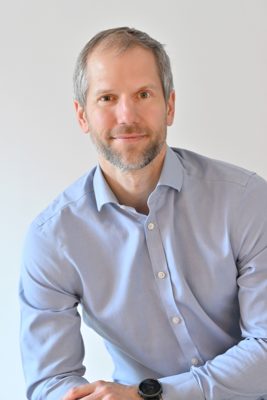

Per is co-founder and CEO of Amundsen Investment Management. Prior to founding Amundsen, Per was Global Head of Equity Enhanced Indexing at Norges Bank Investment Management (the Norwegian Sovereign Wealth Fund), where he oversaw the management of the fund's $700bn equity index portfolio, invested across 9000+ companies globally. Per is an engineer by training, with a Master of Science from Ecole Polytechnique in France and MIT in the US. Per serves as a member of AMF's consultative committee on Disclosures and Corporate Finance, FTSE Russell’s EMEA Regional Advisory Committee, and Euronext Oslo's index advisory committee.
Transcript
Auto-generated
3, 2, 1.
Per Einar Ellefsen: Hello and welcome to IPO Stories, a podcast that explores the paths to IPOs for companies and their stakeholders. Through interviews with professionals who have led companies to public markets, we learn what it takes to IPO a business—the do’s and don’ts before, during, and after the listing process.
I’m Per, co-founder of Amundsen Investment Management, a Europe-based equity manager.
Today, we’re joined by Øystein Kalleklev, CEO of Flex LNG and Avance Gas, two shipping companies listed on Euronext Oslo. These companies operate in different segments—liquefied natural gas (LNG) for Flex, and liquefied petroleum gas (LPG) for Avance.
Øystein has led Flex LNG since 2018 and became Executive Chairman, then CEO, of Avance Gas in 2022. We discuss how one becomes CEO of two listed companies, what it’s like operating in the volatile shipping market, what listing means for such businesses, and the experience of dual-listing Flex LNG in the U.S.
Before we start, we remind listeners that this discussion is not financial advice, nor an investment recommendation, nor a solicitation to buy or sell financial instruments. The information contained here is for informational purposes only. Amundsen Investment Management and the participants in this podcast may hold positions in the companies discussed.
We’re here today in the Oslo offices of Flex LNG with Øystein Kalleklev. Øystein, perhaps you can start by introducing yourself—and how you became CEO of not one but two listed companies.
Øystein Kalleklev: Thanks, good to be here. I’ve been with Flex LNG for about six and a half years. I joined in 2017 after time at Knutsen Shipping Company, and earlier with JoMo, the investment company of Jens Ulltveit-Moe.
I became CEO of Flex LNG in 2018. Then in 2021, I joined the Avance Gas board—since I had gas-shipping experience, and John Fredriksen had just acquired a 77% stake. With such a low free float, it made sense to become more involved.
In 2022, when the Avance CEO left, John joked that since I’d fixed all my LNG ships on long-term charters, I’d have time for another company! So I became Executive Chairman, and later transitioned to CEO of Avance Gas. It wasn’t planned—it happened naturally.
The LNG and LPG Businesses
Per Einar Ellefsen: So, let’s talk about gas shipping itself.
Øystein Kalleklev: Sure. The big driver has been the U.S. shale revolution—it’s made the U.S. the world’s largest exporter of LNG and LPG.
For LNG, exports are growing rapidly, even with the Biden administration’s temporary moratorium on new projects—which I believe will be lifted post-election.
For LPG, the U.S. now accounts for nearly half of global exports, and since it’s farther from key markets like China, India, and Japan, voyages are longer—so it’s more ton-mile intensive.
Per Einar Ellefsen: And what’s the difference between Flex LNG and Avance Gas?
Øystein Kalleklev: Flex is an LNG shipping company we’ve built almost from scratch. John Fredriksen founded Golar LNG years ago, later selling out and acquiring Flex LNG, which had two newbuild contracts at the time.
We expanded that fleet to 13 modern LNG carriers delivered between 2018 and 2021. The key was technology—new-generation ships are 60% more fuel-efficient than older steam-turbine vessels.
We ordered when shipyard prices were low—about $180–185 million per ship—and capacity was available. We knew U.S. export volumes would rise, so we built the fleet and later fixed long-term charters as the market strengthened.
Today, 12 of our 13 ships are on long-term contracts—mostly with Cheniere, supermajors, and major trading houses—giving Flex LNG stable cash flows through 2033.
Avance Gas is similar but in LPG—very large gas carriers (VLGCs) transporting propane and butane. LNG requires cryogenic tech at -163°C, while LPG is handled at -42°C—much simpler.
The LPG market is spot-driven and volatile. Rates can swing from $150,000/day to $10,000/day. But our breakeven is in the low 20s, so we’re profitable even at moderate levels.
Last year was a record: $163.6 million in profits for Avance, compared to $138 million for Flex LNG.
We’ve also sold older ships and even newbuilds at strong profits—selling vessels contracted at $78 million for $120 million each.
Global Gas Dynamics
Per Einar Ellefsen: The LNG market has changed a lot—with shale, and then the Russia–Ukraine crisis. How’s the cycle been?
Øystein Kalleklev: The shale revolution transformed the U.S. from an importer to an exporter. It’s been great for the U.S. economy but less so for investors—many lost money chasing growth over returns.
In LNG, the most dramatic moment came in 2022—Europe’s prices spiked from $1 to $100 per MMBtu when Russia curtailed gas flows. That’s equivalent to $600 per barrel of oil—unsustainable levels.
Now, prices are back around $10/MMBtu, a more normal level that supports Asian demand while keeping Europe well-supplied.
Building Infrastructure and Capacity
Per Einar Ellefsen: What’s the bottleneck—ships or export terminals?
Øystein Kalleklev: Today it’s liquefaction capacity, not ships.
Building an LNG export plant used to take five years; now modular designs can be done in 28 months—about the same as building a ship. But many U.S. projects are delayed by the Biden moratorium until after the election.
Industrial vs Commodity Shipping
Per Einar Ellefsen: You’ve described LNG as “industrial shipping.” What do you mean by that?
Øystein Kalleklev: In shipping, industrial means long-term, logistics-based contracts; commodity means spot markets.
LNG lies in between—moving from long-term industrial contracts toward more spot flexibility. In tight markets like 2022–23, cargo owners hoard ships; in balanced markets, liquidity returns.
The SeaTankers Group Advantage
Per Einar Ellefsen: Flex and Avance are part of the SeaTankers Group. What’s the benefit?
Øystein Kalleklev: Efficiency and scale.
From our Oslo office, less than 100 people manage 289 ships across companies like Frontline (tankers), Golden Ocean (dry bulk), SFL Corporation (leasing), Flex LNG, and Avance Gas.
We share IT, legal, and technical services, pool shipyard negotiations, and leverage group buying power. The Fredriksen family’s long experience ties it all together.
LNG and the Energy Transition
Per Einar Ellefsen: Let’s turn to LNG and the energy transition. Natural gas burns cleaner than coal, but methane emissions are a big concern. How is the industry addressing that?
Øystein Kalleklev: It’s a valid concern—and solvable. Methane is 28 times more potent than CO₂ over 100 years, so even small leaks matter.
Upstream emissions can be monitored with infrared cameras and satellites like the EDF Methane Tracker. Around 80% of methane emissions are technically feasible to eliminate, and half are profitable to fix—because less leakage means more product to sell.
On ships, we’ve cut methane slip by 95% with our latest ME-GA engines—down to 0.2 g/kWh versus 4 g on older designs. It’s nearly eliminated.
Dual-Fuel Engines and Alternative Fuels
Per Einar Ellefsen: So, your LNG ships burn gas directly?
Øystein Kalleklev: Yes. Cargo naturally warms and “boils off,” creating gas we use as fuel—supplemented by a little diesel for ignition.
When gas prices were extreme during 2022, we used reliquefaction systems to capture and return that gas to the cargo tanks, switching to diesel to save value.
Today, with LNG prices lower than diesel, we burn LNG again.
Per Einar Ellefsen: What about LNG propulsion for other ship types?
Øystein Kalleklev: It’s growing fast—over 400 ships on order with LNG propulsion, especially container ships that sail fixed routes with predictable bunkering.
LNG reduces CO₂ by 20% and can blend with biomethane, cutting lifecycle emissions further—potentially even net negative if sourced from farm waste. It’s a practical step toward decarbonization.
Managing Volatility and Cycles
Per Einar Ellefsen: Shipping is volatile—how do you manage that risk?
Øystein Kalleklev: In 2020, during COVID, LNG prices crashed and U.S. exports collapsed. We were fully spot-exposed but still managed a small profit—then shifted to long-term charters to de-risk.
Avance Gas is trickier—it’s spot-driven. We hedge selectively with freight derivatives and scrubber spreads, but mainly rely on balance-sheet strength and opportunistic asset sales.
Per Einar Ellefsen: It’s hard to order ships when your share price is low. How do you deal with that?
Øystein Kalleklev: That’s the classic shipping dilemma. Most companies order at the top when they can, not when they should.
We try to do the opposite—pay out big dividends during booms and keep flexibility to invest during downturns, when newbuild prices and interest rates are low.
That’s how you survive multiple cycles.
Listing in the U.S.
Per Einar Ellefsen: You dual-listed Flex LNG in the U.S. in 2019—one of the first Norwegian shipping companies to do so. Why?
Øystein Kalleklev: To reach U.S. investors who understand dividend-paying industrial shipping.
We’d already raised $300 million in Oslo in 2018—it’s efficient and fast here. But once the business matured, we wanted access to the U.S. capital market.
We did a direct listing—no underwriters, no dilution—just registered our shares on the NYSE. It took time to build liquidity, but now 95% of trading volume is in the U.S.
It’s become a model—Hafnia, BW LPG, and others have since followed.
Per Einar Ellefsen: Why direct listing rather than an IPO?
Øystein Kalleklev: We didn’t need new capital. A marketed IPO costs up to 7% in fees and often requires a discount to peers. Direct listing avoids that.
After a year, you can always do a follow-on offering if needed, much cheaper and simpler.
Per Einar Ellefsen: And what has it changed for you as a CEO?
Øystein Kalleklev: Not much operationally—more investor travel to the U.S., but many of our customers are there anyway.
We were already SOX-compliant and using U.S. GAAP, so the transition was smooth. The main difference is investor base and liquidity—today, most shareholders are U.S. funds and ETFs, not Norwegians.
Final Reflections
Per Einar Ellefsen: Final question—you’re CEO of two companies handling flammable cargoes. Does that keep you up at night?
Øystein Kalleklev: Not really. LNG shipping has existed since 1959 without a major accident. The cargo is light, non-corrosive, and stored at atmospheric pressure.
If a spill happens, it evaporates—it doesn’t cause oil-like pollution. So, LNG shipping is actually among the safest segments in maritime transport.
Per Einar Ellefsen: Thank you very much, Øystein.
Thank you for listening to IPO Stories. In future episodes, we’ll host CEOs, CFOs, advisors, and other market participants to learn from their experiences—like Øystein Kalleklev today.
If you enjoy the show, please follow us on Spotify or Apple Podcasts, share it with others, and send your questions to contact@ipostories.com.
Follow Amundsen Investment Management on LinkedIn for updates.