 Amazon Music
 Deezer
 TuneIn + Alexa
 iHeartRadio
 PlayerFM
 Listen Notes
 Podchaser
 BoomPlay
We were totally naive about the IPO process and the market… it was key to assemble the right team to prepare the company
In this episode, we sit down with Mathieu Lefebvre, the co-founder and CEO of Waga Energy, a French clean energy company that listed on Euronext Paris in October 2021 in a €126 million IPO. Only six years after founding the company, Mathieu and his co-founders chose the public markets to fund Waga's international expansion. Mathieu and his team led the company through volatile markets, higher inflation, a difficult €55 million follow-on capital raise in 2024, and ultimately to a take-private by EQT, announced in June 2025.
Waga Energy has developed a unique technology, the Wagabox, that converts landfill gas into renewable natural gas, turning a major source of greenhouse gas emissions into a usable energy source that is injected directly into the local gas grid. The business is capital intensive but with high visibility: Waga invests in, owns and operates its units under 15 to 20 year contracts with landfill operators and gas utilities. From a French startup, the company has grown into a global player with 55 projects today across seven countries in Europe, North America and Latin America.
With Mathieu, we discuss why a young company chose to list so early, the realities of being a small cap in a turbulent equity market — including a forced exit from the MSCI small and mid cap index that triggered a sharp share price correction just before the 2024 capital raise, and ultimately the strategic decision to return to private ownership with EQT.
Disclaimer: The discussion in this episode is not financial advice, nor an investment recommendation, nor a solicitation to buy or sell any financial instruments or an offer for financial services or any other transaction. The information contained in the recording has no contractual value and is intended for informational purposes only. Amundsen Investment Management and the participants in this podcast may have holdings in the companies being discussed. Any views expressed are those of the guests only, and not of Amundsen Investment Management.
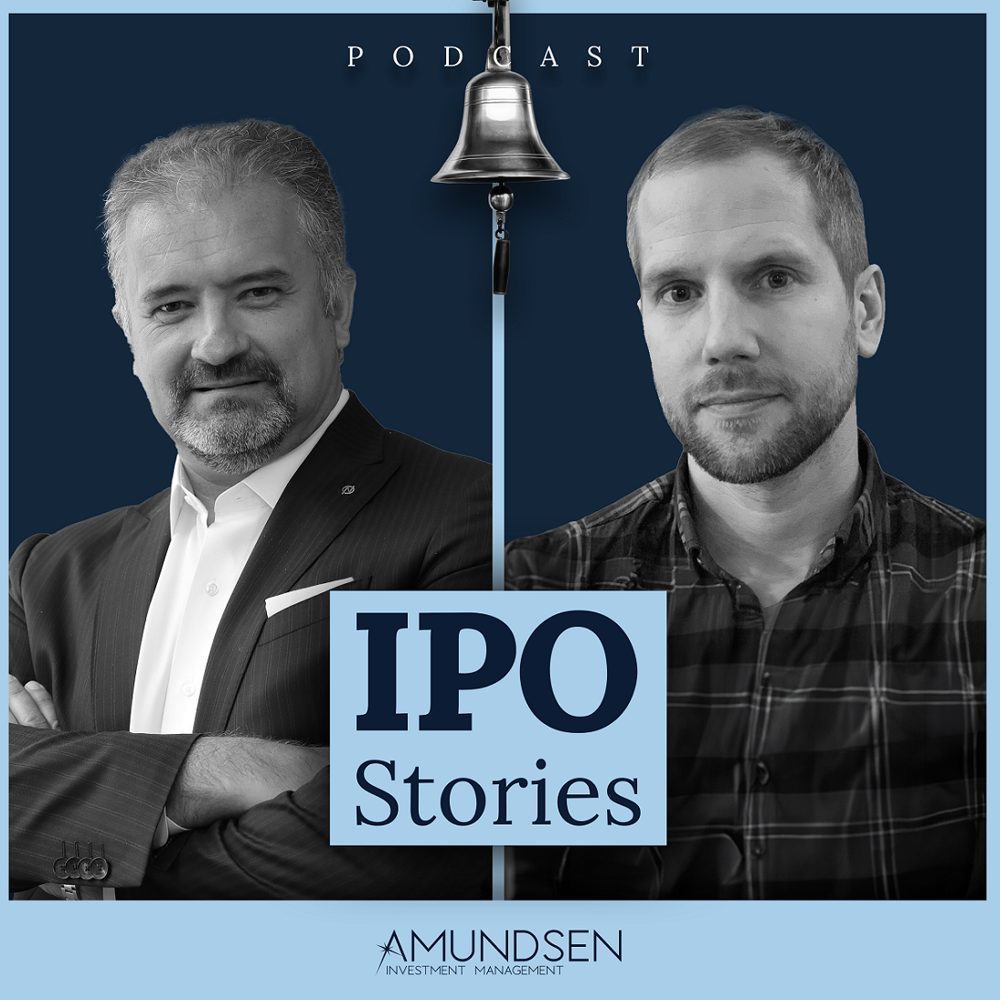
Mathieu Lefebvre is co-founder and CEO of Waga Energy, a French clean energy company that produces biomethane from landfill gas using its proprietary WAGABOX technology, which he took public on Euronext Paris in October 2021.
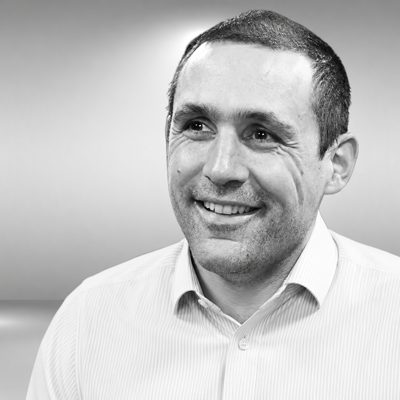
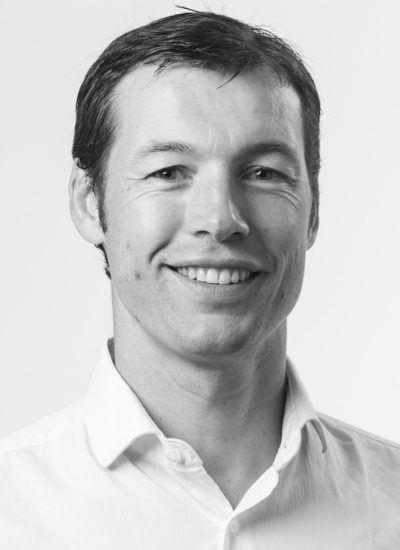
Gautier is co-founder and CIO of Amundsen Investment Management. Prior to founding Amundsen in 2021, Gautier was a Senior Portfolio Manager responsible for overseeing NBIM (the Norwegian Sovereign Wealth Fund)'s IPO investments and Equity Capital Markets activity. He started his career at BNP Paribas and as an ECM banker at Goldman Sachs before working as an investment manager in the French private equity fund Activa Capital. Gautier has a degree in Accounting & Finance from the London School of Economics and a Master in Business Administration from INSEAD.
Transcript
Auto-generated
Gautier: Matthieu, I'm very happy to have you on the show today. Thanks for taking the time. Can you start please by introducing yourself?
Matthieu: My name is Matthieu Lefebvre and I'm the co-founder and the CEO of Waga Energy. I'm an engineer by training and I actually spent 12 years at Air Liquide where I set up the biogas activity. So I've supported the development of the first biomethane project in France and over Europe. Over time, I became really convinced that biogas is a key pillar for the energy transition and recovering methane from landfills could have a really massive impact on climate change on one hand and pushing forward the energy transition on the other end. So in 2015 with two colleagues from Air Liquide, Nicolas and Guénaël, we decided to leave Air Liquide to create Waga Energy with a very simple and crystal-clear mission: turn a pollution into a resource, so turn landfill gas into renewable natural gas. And since then, so since 2015, we've developed the Wagabox technology, we built a global team, a global organization and we've grown from a small startup into a listed company deploying projects all across Europe and North America.
Gautier: In 2015 you said, with two colleagues out of Air Liquide, you rapidly decided to become a public company because in '21 you launched your IPO. That's only six years after the initial startup. How come it came so fast, this decision to be public?
Matthieu: We've founded Waga in 2015, but in fact we were working on biogas for many years. As I've said, I've set up biogas activity back in 2007. So the preliminary phase where you are discovering the market, the technology, the ecosystem, the industry has been done through Air Liquide. So in 2015 when we decided to launch Waga, we were quite mature on what we wanted to do, the technology, the market, the business model. So it's true that we grow very rapidly, but it's because we've started already launched, I would say.
And the second very key point is the business model. We have a very capital-intensive business model, which is really great for investors. So what we are doing is to invest in gas plants, the Wagabox. This Wagabox will turn the landfill gas into biomethane. So we develop this project, we invest, we own and operate the Wagabox over long-term contract, 15-20 years. So we sign long-term contract with the landfill owner and we sign long-term contract with the utilities to sell the energy. So we have recurring revenues with a very highly predictable turnover and profitability. But to do so, we have to invest. A small Wagabox costs roughly 3 million, a big one 30 million, so it's very capital-intensive.
Why we decided to go to the IPO so early? We have the first-of-its-kind, I would say, the proof of concept that has been commissioned, so the first Wagabox early 2017. Then we have a domestic rollout of roughly 10 Wagabox in France between 2017 and 2020. We started our international expansion with some great success in Canada and from that point, as we were successful, the situation was that we had open massive potential. There is thousands of landfill site in North America and with the success in Spain, we have opened all the countries where there is no mechanism to support biomethane production. So the potential was massive. When we are saying massive on a capital-intensive business model, it means that we need massive amount of money. So that's why we went public and you will probably have many more questions around why, what was the other solution, but it's a mix of the maturity of the when we decided to launch and the business model that triggered the IPO choice.
Gautier: So you kind of spun out of Air Liquide. They were shareholders as well initially. You had some other venture capital and family offices as shareholders. Everyone was aligned for you and the three co-founders to go ahead or you had a bit of a debate and you did consider other options before raising more capital in the public markets?
Matthieu: Yeah, so no, it was not an easy journey. So perhaps coming back a little bit on the equity story to fully understand where we were before decided to went public. So for the really first project we needed a lot of capital, 4 million. And we have been able to secure half of it through subsidy from the French energy agency. But to leverage this public money, we needed to find the same amount of equity. So we raised 2 million. With this first capital raise we've been able to finance the first Wagabox and to prove that our technology, our business was okay, I mean was profitable and we were able to build this project and to make them successful. We've started the domestic rollout, for that we needed a lot of new cash. So we had at that time five small funds very happy with the story.
Our goal was really the impact to grow as fast as possible. We needed between 100 and 150 million euros to address properly the potential we had opened. They were not able to accompany us at all, and they have not even anticipated that we will have this challenge to overcome. So in end of 2020, early 2021, we've analyzed with some advisors and between the founders all the options that were available for funding this kind of company. Having in mind that we were still a bit EBITDA negative because of the growth. Every project was profitable and the technology was running very well, but we were still EBITDA negative. The IPO appears for the founders to be the really best solution for governance, for strategic autonomy, for independence. You know we are small players in between big waste management companies, you know like the Veolia, Suez, Paprec, et cetera, and energy utilities—Total, Engie—so our independence is critical to address 100% of the market worldwide. We were still a young company so we really want to keep our strategic autonomy.
Becoming public was for us the way to raise a lot of money, to dilute the investors. From five investors we switch to thousands of financial investors and to keep the DNA of the company which was the impact. That was the condition. When we went to the board to explain that we decided to went public, the first reaction was really, really negative. They did consider that we were not ready at all, that it's going to be a fail, that it was not prepared, that we were not mature enough. It was January '21, end of January '21. So it was really not at all the reaction we expected from them, exactly the opposite one. In fact we thought that they were going to be very happy because it's a lot of sacrifice for the management, because it's a lot of work, a lot of commitment. But with the support of our advisors and our bank, we convinced them that it was the right instrument, the right strategic decision and roughly two months later they were fully aligned with us and asking us to speed up as fast as possible.
Gautier: So management, you were seeing the growth opportunity and the pipeline building up of projects and Wagabox to be deployed. But as you say, it's quite capital-intensive and you needed the funding and your current shareholders did not necessarily have the means to fund that growth. So obviously we can understand from your perspective you wanted to raise more capital.
Matthieu: Just to complete, in fact it was also for them a loss of control.
Gautier: How much did you have, the three founders together, of the company?
Matthieu: We were in the range of the 40%, but we were minority shareholders. We didn't have any big cornerstone investors. All of them was minority shareholders individually. Being public, it's clearly a loss of control for the initial investor, but honestly it's the best thing that could happen. Having the control of a company doesn't mean that you will create a lot of value. Here it was a bit of a challenge because we as the founders really wanted to maximize our impact, whatever the dilution, whatever the control or the governance. We wanted to deploy as many Wagabox as possible while keeping our business model.
Gautier: It's true that it's not that frequent that we see young companies coming so quickly to the market, but because as you say, there is always a bit of a negative perception about losing control or flexibility and independence, and you have to develop the business and the same time making the company ready for public markets. It's an additional challenge and if you can afford and fund your growth without going to the market, we often see obviously this is a preferred option. But given the business model of Waga Energy, it's fair to assume that the quantity of funding required for funding this very strong growth ahead of you, you didn't have that many options on the table but being public.
Matthieu: You are totally right. So nobody imposed us to go public. It was an objective analysis of the situation, an alignment with the mission of the company. So it was a decision we took with the three founders, Nicolas, Guénaël, and myself. Usually I think it's the other way, some shareholders are asking to go public to find a liquidity or something like that. It was not at all our case and perhaps we really surprised our shareholders. None of them has never been as ever IPO a company or administrated a public company. So it was totally new for them.
Gautier: And I think for everyone to remember, the IPO was mostly quasi-just new money, right? Out of the 126 million that was placed at the IPO, 124 was new money, only 2 million of secondary. So as you say, it was not an event to monetize for anyone, but it was very much a capital market event and raising capital for funding growth. At the same time back in '21, the IPO market was very strong, if we remember. I actually checked the data. You had over 23 IPOs in France only. And for reference, last year in 2024 you only had one IPO raising 50 million euros. But in '21 the market was quite supportive and open: 23 IPOs raising more than 3 billion euros. So the market conditions were also, I assume, helpful and maybe helped your board to get comfortable with being public. Did it play into consideration at the time?
Matthieu: The fact that the market was open, that there were a lot of IPO, et cetera, has an influence on the fact that we've been convinced that it was the right instrument for us. If we would have been in a market where there were no money at all and it was impossible to raise more than 20 million or something like that and with a lot of constraint, it would not have been the right instrument. If you understood what I've tried to explain about where we were at that stage, with all the potential that we have open and the DNA of Waga, which is to increase, well, to have the to maximize the impact, we didn't really care and we were not expert enough to understand that the market window was critical. We believed that being public was the right choice, that we will succeed, and we raise a lot of money and that will help the mission of Waga.
Gautier: Maybe one last question on that topic because you could always go and raise capital with infrastructure funds or specialized funds which understand the business model of Waga, which is quite particular, projecting itself for the many years ahead with a long-term vision as well and still being private but raising large amount of capital not necessarily through the public markets. Was it an option at the time? Were you too early, too small to do that? Anything you can share on that process at the time?
Matthieu: No, it was really the plan B. We had some offer. So it was really a strategic choice whether to go with an infra fund or to go public. The way we decide and why we choose the IPO is really what I've said: governance, autonomy, independence. If we would have welcomed an infra fund for 150 million, this fund would have taken a majority stake and the governance would have been impacted a lot because then it's not anymore the founders' company but the infra fund strategy will have impact a lot the trajectory, the decision in Waga. And we considered that we were not mature enough and not as entrepreneurs strong enough to challenge or to face such a situation.
Gautier: And with the hindsight now, you still think that was the right decision at the time?
Matthieu: Definitely yes. An IPO is really a booster for growth. It change the orbit of the company. You speed up the structuring of the company. You clarify very deeply the technology, the business model, the shareholders, the risk. You make everything public in term of recognition, especially for foreign market. So in the US, in South America, for them playing with a public company is much easier than a private one. So we gained a lot in recognition and we would not have performed as we performed, especially in the US, in the market and success, without being public. And we've seen that we gained a lot with the governance, being obliged to have some women in the board, some independent board members, some rules that has to be respected because you are a public company, made an expert framework. All of this helps us a lot to professionalize, I would say, the company and it would not have been possible as fast with a private fund.
Gautier: The momentum was actually very good in October '21, the market, but the interest for Waga. I remember the book was more than four times covered. You brought in some cornerstone investors, I think a few strategic investors, and then the momentum meant that actually you also upsized your IPO size, right? And so you eventually raised more money than you initially thought you would be able to.
Matthieu: When we've launched, we were not at all convinced and secured on the amount, you know. It was a surprise for us to be four-time oversubscribed and you create a dynamic. If, I don't know, perhaps if we would have started 20 millions more and the market it's like, you know, the mayonnaise. Only one droplet can change the mixture. So it's impossible to backtrade, but 126 was great, with a great valuation. I do not regret anything and I would do exactly the same if I had to re-do it.
Gautier: The challenge for private companies when they come to the market, as you say, they need to be IPO ready, but they need also to start communicating to the market a plan, a financial guidance and as much as possible stick to it. If I remember, you came with a 2026, so actually this year, targets at the time. Was your capital raise already at time of IPO in '21 supposed to fund the entire plan until '26? Or you had in mind that will be listed and we can come back to the public markets to raise a bit more capital as we want to deliver our '26 targets?
Matthieu: No, the initial plan was that with this money, properly leveraged with bank debt, we would be able to make the plan, to make the guidance. But what happens following the war in Ukraine is a lot of inflation and we had underestimate a little bit the engineering cost in the US. And as we were on the trajectory we've forecasted before the IPO, the amount of money that was needed to really kick off the business—but it's the way perhaps to fully understand the business model and the reason for the equity needs and the finance needs—so every Wagabox is an SPV, so a special purpose vehicle. This special purpose vehicle is a project in itself. We fund this SPV with 20% of equity and 80% of bank debt. But we were still a young company and at the beginning you fund 100% equity. And once you have been able to prove to the bank that your project is robust, is safe, that the predicted cash flow are the actual cash flow, then you are able to lever your equity with bank and to refinance and this means that you have some fresh money to invest in the new project. So it's really like a pump. The unfortunately, it was not like a very predictable and nuclear curves. You have some acceleration, sudden acceleration. So the amount of equity needed at peak was slightly over what we anticipated. And as we have signed many, many deals, big deals in '23 in the US, because we were very, very successful on a big market where the capital cost, well, the engineering cost was slightly more expensive than what we anticipate, then we had to came back to the market. But it was for good reason, because every project is profitable, but it means that the 126 million that we have estimate back in 2021 was not enough in '23-'24 market condition.
Gautier: So you explain really well that you had to come back to the market to raise more capital in '23. If we recall that's a time where for different reason and market reasons, the share price have been under pressure, but did so the entire sector. Did you feel that was a bit unfair to come at this point in time to raise more capital because obviously the share price were below the IPO price? Was it a constraint in your willingness to actually raise more capital publicly?
Matthieu: Looking at this period today, again it's like a bit of backtrading, so it's I would say easy to analyze a posteriori what happens back in 2023. It was probably one of the worst time we ever had during the Waga Energy journey. So just to remind you a little bit the situation. So we have raised capital back in 2021 through the IPO, 126 million. We have, I would say, perfectly executed the plan that we have sold to the investors. We didn't anticipate at all for sure the war in Ukraine. If you remember this time, so a lot of money has flowed in the in the market post with the COVID and post-COVID. A lot of money. So there were plenty of money in '21, et cetera. Interest rate was really low. In '22, war in Ukraine, the effect, the impact of this war was then in '23-'24. We enter a new world with inflation, with very high energy prices, et cetera. So if you look at the global trend, Waga was perfectly aligned with all the trends: local energy, renewable energy, competitive energy, sovereignty, fight against climate change, et cetera. But with more uncertainty in the future, small and mid-caps are seen as, you know, more fragile company, less robust than the CAC 40 or SBF 120, et cetera. So 8 billions of investment has flow out from the small and mid-cap segment to the large cap. So there were really a dry dry-out of the liquidity on small and mid-cap. But we were developing very well. So as we were fulfilling our commitment, the objective we've mentioned to the investors, I think we had a really good trust between investor, the market, and Waga. And the market price was still good, between 25 and 30. So we are still over the IPO price. So I would say this is normal. But as we have to come back to the market because of the inflation, because of the higher capital cost that anticipated in the US, we have prepared the market through a capital market day. And when we decided to went public, one of the reason as well was to say, okay, we will need more capital in our growth journey, we will need more capital to tackle billion dollar deals tomorrow and being a public company one of the objective is to access to capital. So being in a situation where we didn't want to slow down the growth, we decided to go to a capital raise on the market. But what we didn't anticipate unfortunately is that we entered into an index in May '22, the MSCI small and mid-cap index. We enter into this index because we had a valuation which is over 723 million. It was really the peak of the valuation. But then in a difficult market, the liquidity of Waga has decreased a lot because there were no reason to sell for people, because people were really believing in Waga story. But again, the small and mid-cap market liquidity has dried up dramatically. And after we soft announced our capital raise for good reasons, we have exited this index. Not for operational reasons or whatever, just for liquidity reason, which is totally not under control. It's an exogenous factor. But in this situation, the index fund has to sell their position within two weeks and if there is nobody to buy your share in front of that, the stock price fall down. So we fall from 25 to 13. What to do? Our principle, our mission is to have the maximum impact on climate change and energy transition and we had many projects to build. We didn't want to slow down. So we decided to launch the capital increase because we didn't want to sacrifice our growth, our climate impact in front of some value consideration I would say. So we accepted to dilute our shares, to dilute investors. It was a very good entry point for some investors, but we decided to launch, but it was very stressful because when you launch a 50-55 million capital raise the week after your your stock price has been divided by two, you're not sure that the investor will still trust you.
Gautier: So this is where you feel a bit hostage, taken hostage by the market and some technical factors, right?
Matthieu: At that time, so in '24, there were no more money for small and mid-cap. So even for all the funds that really loves Waga story and this stock, et cetera, and wanted to invest, they didn't have any money to invest. So we did it and when you'll compare the situation of Waga back in 2024, spring 2024 and three years before at the IPO, we have delivered a lot. I mean we were much more mature with many more proven project up and running. We have entered the US market, which is a massive market. So it's true that it can be hard for entrepreneur to say, okay, my my company has not value has not increased whether we have we have overcome so many milestone. We were not at all the same company. But in the other hand, interest rate has increased a lot. We have long-term contract, so the value of money when you look at the DCF—so the way you evaluate your company—has changed and a company value depend on the market condition and that's all, you have to just accept that.
Gautier: No, you have to accept that. It's difficult. How do you manage the frustration internally with employees and maybe some of your pre-IPO shareholders were not necessarily familiar with these market movement and this is a bit of the game being public as well. You said it was a very difficult moment for you as a company, but was it also a lot of questions about why the market was penalizing you specifically or you understood very clearly that was a market event and there's nothing you could do against that?
Matthieu: It was very hard because very fast as well. We try to explain a lot what we were discovering, I mean or understanding from the market, but it was really bad luck, really bad luck. And we assess all the different options, but at the end the option we retained, the founders, was to still move forward. We didn't want at all to to sacrifice the growth and we do not regret because just after that, our capital raise has been awarded the capital raise of the year. It was the worst time ever for Waga and for us, but we have been awarded by this capital raise of the year. But this opens our eyes about the capacity of the market to finance our growth. It was very difficult to fund 50 million, but with our ambition, it's couple of hundreds of millions we need to fulfill our well, to accompany the growth. So it open our eyes and it also help us to raise a massive corporate debt. We raise 100 million of corporate debt that would have not been possible without this capital raise. So all in all, it was an experience and we use this experience to grow.
Gautier: No, but you did very well and it's difficult to predict all those technical events. One thing is understanding index, you mentioned the MSCI but FTSE and a lot of other indices which you know passively track companies. There is liquidity requirements, market size requirement which are a bit beyond your control and we always tell companies, be careful of that because you might underestimate it and you might not see it coming. But more and more as more and more passive money is is invested in public market, actually it does play a role. At the same time, interestingly you say none of the management and the board really had public market experience before the IPO. But you had an IR at the time? You you were fully aware of those market technical factors and the need to get liquidity, to get sell-side coverage and all of that to make sure you could meet those liquidity requirements?
Matthieu: So I'm an engineer by training. I never had any stock to manage. I I never been in the public market. I'm not a finance guy. And how I would say as an engineer I'm try to be rational and here there were no rational. I mean, this index, they enter Waga at 38 and they sell at 13 while there were no operational reasons.
Gautier: I think it's a lot of engineers behind those algorithm by the way. So it's different engineers. But but I think as you say is very, very rule-based and there's not much rational, at least business rational, right? But some investors managed to use that as a good entry point as as you said as well. I had a question, interesting, did you observe over the years since IPO till in '21, then the capital raise later in '23 as well, till non-profitable but I guess close to profitability and with a very much bigger pipeline and a path to profitability. So were the type of investors very different versus the IPO, or similar type of funds and investors?
Matthieu: We had quite a wide range of investors. We did a massive outreach before the IPO, so during the strategic pass and then the early marketing. I met many hundreds of investors because we are a pioneer, it's a brand new market with a technology breakthrough. So we really had to made a lot of education. But once our investor were convinced and has invested in Waga, most of them like the the company, the idea and took the position and didn't change their position, some time reinforced. So the capital has not changed that much during these few years on the professional investors. One of our problem is that we were too small, so we didn't have access to the med medium or larger fund. For that we need to have an over 1 billion valuation and we've not been able to to overcome this threshold to open larger investors.
Gautier: And retail? Has it been a core part of your strategy in term of diversifying shareholder base and obviously being public you're more visible vis-à-vis retail investors? There was a lot of interest maybe for for the thematic, for decarbonization, energy transition, so that should fit well with some retail portfolios. Did you track that as management?
Matthieu: Yeah, yeah, yeah. We definitely—well just to give you an order of magnitude, as we understood that it's a little bit like business, I mean you need to convince new investors every day. If you need to substitute an historical investor or a seller, you need a portfolio of interested investors. And some investors are not coming just for, you know, 10,000k. They want one, two, three, 10 million position. So you need to have a portfolio of really to invest investors in case you need it. And it's true as well for retail. So honestly I think I was spending 30 to 50% of my time speaking with investors in '22, '23.
Gautier: 50%?
Matthieu: 30 to 50%, yeah. I think I was really trying to widen the investor portfolio and the retail as well. So we had at that time something like 8,000 investors, probably a hundred of institutional investors and thousands of retailers.
Gautier: Okay, that's that's a lot. But you had obviously a full team, right? CFO, IR. So you were you were staffed and you invested in the resources internally to do that.
Matthieu: No, we were not so structure. So most of my time, so it was a diversion, I would say. Before that I was really focus on developing business, but in 20—so '21, '22, '23, I was on early '24 before the capital raise, I really spent a lot of my time for the financial market. Also because I knew that we will have to come back to the market and if capital raise was needed, I would need new investors. So I was really trying to make Waga known by as many investors as possible.
Gautier: And obviously fast forwarding now, today there's been interest from EQT who became a shareholder. That so we back to this infrastructure funds idea. So them becoming a large shareholder, taking the company eventually private. What are EQT supposed to solve that the public markets were not necessarily solving for you as management team?
Matthieu: We have a capital-intensive business model. We want to grow and to maximize our impact and today the limited factors is clearly the quantity of fund that we can spend to fuel this growth. So following this very difficult capital raise back in '24, some opportunities appear, but the opportunities was not 50 million, it was couple of hundred million. We were in this situation where it was not possible with the capital market to accompany us in this big opportunities, especially with a valuation that was now quite low compared to the to the money we need. Our capital structure was not able—so the historical investors, it was the amount was way too high for them because we have only small fund. So again, this capital raise open my eyes on the fact that we were not in the right place for our ambition. We could have been very satisfied with the market and decided to slow down the growth and stay public. But it was not the company purpose, not at all. So as again we didn't want to sacrifice our mission, we started to think about all the capital structure evolution that could be possible to tackle these great opportunities on the market. And there is a couple of options, but the one we've selected and that has been executed is really in my mind the best one with the best possible player which is EQT, the largest infra fund in Europe. Great people, totally aligned with our strategy to deploy Waga worldwide and to make Waga the global leader of the renewable natural gas production. So with such a fund, we don't have any stress anymore in capital availability. Their mission is to deploy capital in infrastructures that support the transition. So it's perfectly aligned with our needs.
Gautier: And now obviously a bigger company with experience of the public market, so probably a bit better organized and structured and experienced as well with having such a large shareholder, right? Because as you say initially, you wanted to keep your autonomy and independence when you chose initially the IPO. How do you reconcile that willingness of being independent autonomous as founders versus having such a large shareholder as well alongside you?
Matthieu: Yeah, so Waga today is not the Waga five years ago. We are much more mature. We have 55 projects all over the world, a very strong DNA and we have shown that this recipe is working well. And what and it seems that EQT is happy with this recipe and this company and want to support with new money the growth. They don't want to change the company. They want to fuel the growth. So between '21 and '26, we have really proven that the management is able to grow the company, to execute properly the plan, that the technology business is proven in many countries. The only thing we need is capital. Then an infra fund perfectly fit. So today it's totally aligned with our ambition, our DNA and again, an infra fund like EQT they don't want to change the recipe. They want to boost it. They want to allow us to update to be an enabler to even speed up the growth, reassess the ambition.
Gautier: You probably have different option as well, but one is did you ever consider maybe listing in the US? I know we hear a lot of growth companies in Europe looking at the US capital because valuations tend to be higher. It's not very true but depend on sectors. But I think you always refer as well at Waga Energy that you had some local comps in the US which were better valued, right? And maybe that could have been an option for you to also raise capital specifically in the US?
Matthieu: Honestly I think we were not mature enough because being a public company in Europe is already a very big challenge, but it's another 10 times bigger challenge in the US. So you have to be very strong, big enough with a mature business to get public there. So no, this was not really an option.
Gautier: And fast forwarding, it's a difficult question obviously, but if you have now a very strong partner to fund your growth. I mean those private equity, they also need liquidity at some point in a couple of years down the road. Maybe it's five, six, seven, eight, nine years depend of their fund's life. But do you think there will still be room for a company like Waga, so a bigger Waga Energy, to come back to the market? Do you think the public markets can play a role for larger assets that you eventually will be if you project yourself, or you think private is a better setup for the business model?
Matthieu: No, no, definitely the public market could be an option. You have to keep the agility in fact and to assess properly without pre-conceived ideas what is the best instrument for your maturity, for your challenges of today. And it was for some people really strange to say but you went public in '21 and now you take private in '25 and... Yeah, and we will do exactly the same if I have to because in '21 the IPO choice was the best choice that we've ever made. Being supported by EQT in '25 is the best strategic choice that we've ever made. And perhaps in four or five years, I don't know, going back to the public market will be the best choice. I don't know yet. We'll see where we will be in term of turnover, of EBITDA, of capital needs, where the market will be, the industry will be, and we will decide with which partner we have to work with. And the lighthouse, the guide is really how to maximize our impact to fight climate change and to push forward the energy transition. How do we fulfill our mission with the best partner, the best instrument and this is what I ever widest.
Gautier: Yeah, that's a very consistent way of thinking and executing your strategy. To be fair, the market is what it is, but we looked at the numbers and out of the 23 IPOs of '21, 21 IPOs are below IPO price, well below. And only three IPOs are at IPO price or above. And actually Waga is part of that, I think you just around your your IPO level. So you've been outperforming the market. And I think it's probably down to the really strong execution, but you know, the market is as you say moving, there is cycles and you have to adapt to that as well. I think that's the change of being public. When founders come to see you and ask for advice about public markets, what is typically the feedback you give to founders and private companies considering to IPO?
Matthieu: It really depend on the maturity of the and the type, the business model of the company, et cetera. Why—again, you have to ask yourself why are you going to the IPO? Is it consistent with your story, with your DNA, with your ambition? Because it's such a sacrifice, it's such a lot of work that if you are not totally aligned and it's not the right instrument for your growth, you will you will probably suffer. But if in term of autonomy, of governance, of amount of capital and visibility, recognition, transparency, all this can support your business and help you to grow, definitely you have to go. So you have to be properly accompanied during the process. We are really lucky to have a great finance guy that was available during six months and who has already made some IPO. So having somebody—because we were totally naive about the IPO process and the market—so having somebody who is fully aware of the accountability, the IFRS, the registration document, all of this is really key and has been definitely a key success factor. And we had some great advisors—so the bank, the lawyers—we have assemble the right team to be very efficient, professional in this seven-eight months process. The pre-IPO process is really a great way to progress, to progress on the company personally, et cetera. And you have to be prepared to fail. I hope nobody will fail because it's very hard after couple of months very, you know, short night, very hard work. If the window is closed and you and you fail, it's probably very hard. But nevertheless, even if you succeed, the post-IPO is critical as well. Investor relation, managing the investors, still explaining every day to investors what you are doing, trying to fulfill your commitment. The post-IPO has to be anticipated to make sure that the market will probably receive your company. The other thing is that there is a disconnection between your stock price and your operation. So Waga Energy trajectory is really ballistic. We know exactly what's going to be our turnover in 2030, 2032, 23, because it's a recurring business, infrastructure business. So we have a very predictable forecast. And in the other hand, the stock price, so the company valuation varies a lot. There is a lot of volatility because the valuation depend of the interest rate, the war in Ukraine, the energy price, the last Trump declaration, et cetera. So there is no correlation, direct correlation between what you are doing and your enterprise value. So you have to be fully aware of that and play with that I would say. It's hard sometimes, means a lot of communication, a lot of explanation with your all your stakeholders, your employees, your shareholders, et cetera. But it's the rule, it's the market. It's like that and you cannot go against that. You have to play with. That is totally critical. We really underestimate the liquidity issue and the expertise that is needed to fully understand and anticipate market reaction, for example regarding the index. So being a public company means also that you have to reinforce the finance team and to have a CFO willing to spend times with investors to allow the CEO to be more focused on the company development, not only investor relation. No, I think communication once you are public company is very key, so if you really do not like to communicate probably it's not the right place. And there is something that was really weird at the beginning, but I think it's a strength, the transparency. You are giving all the recipe to the market. Everything is accessible. You are explaining your financial result, your competitive advantage, your risk, the competition, et cetera, on the public market. So everything is public in the registration document, on the press release. It's incredible because you say okay I'm giving all this information to my client, to my customer, to my partners, to my competitors. Very difficult at the beginning but in fact after that, as we are quite strong with our technology and our differentiating factors, it really help us I think. But you have to be ready to be totally transparent. So this means again a very strong alignment between your ambition, the company purpose and business model and the adequation with being a publicly listed company. And then properly manage the guidance. It's clear that the trust is is a strong asset between investor and the CEO or the business. So you have to really try to fulfill your commitment. Under-promise, over-deliver, this is critical. At the beginning for valuation question, for dilution question, you think you know I will set a very high guidance because this will increase the valuation. It's not the right way I think to properly manage the post-IPO market. You have to to set an achievable target and if possible to over-deliver.
Gautier: It's also the best source of value creation and I'm very glad you mentioned all those argument and very good advice I think you're giving to people considering an IPO because there's probably too much focus around the IPO event, which is normal as you say, it's a lot of work preparation. But at the end of the day as you say what matters is the post-IPO and how you can execute on the plan, so obviously being conservative enough to build that trust. Because actually investor, public investor are not necessarily experts as you are specialists, they will have to be comfortable with the management, the quality of execution. And there's a lot of trust which needs to be set and eventually you can earn a premium valuation if you actually are the type of companies and management coming with numbers and executing what they they say they will do. So that help us to have comfort and understanding of the model. And that really drive actually premium valuation. And don't focus on the 20% you raise at IPO, like you did, but on the 80% which are still listed. And I think this post-IPO life—and you mentioned technical factors like liquidity, transparency and playing the transparency game 100% because the more you're transparent the more investors will actually be comfortable and understand the model as well—so it's actually helping this level of trust and understanding and again reflected eventually in the valuation, right? So it's it's good to hear you saying all of that. It's probably learning on the way as opposed to being told initially. But but I think it's also preparing an IPO is just not preparing a listing, it's actually preparing also the public life of a company.
Matthieu: Perhaps a last advice I didn't mention, but as you understood, 100% of my time was dedicated to this process. What does it mean? It mean that the company has to be mature enough to still operate and develop without the CEO and without the CFO. With my CFO and myself, 100% of our time was for the IPO. So we were three founders with Nicolas and Guénaël, so Nicolas especially in front—because Guénaël has left to the to the US to launch the US affiliate—Nicolas has managed the company. So the your business model, your team has to be strong enough and autonomous enough to still operate without you.
Gautier: Often very underestimated how much resources you need internally: finance but from the top management during the IPO and you need those resources available and it's very often underestimated. And by the way what we also very see unfortunately is after IPO a lot of management eventually leave maybe because public market's not for them or it's too much work. Obviously the three co-founders are still around here and that's probably a very good illustration of of the level of commitment but the good organization you put in place to have a sustainable model and management in place just not, you know, executing the IPO and leaving, which unfortunately we we see quite frequently as well.
Matthieu: And perhaps what we didn't do great is that we should have reinforce the finance team during and after the IPO process because it's exhausting and after the IPO there is a lot to do. So it's not finished at the IPO but there is a it's a starting point even if the seven months of IFRS work was just massive, there is a massive work after that. So you have to reinforce your finance team a lot during and after the IPO. Otherwise everybody will be exhausted and and you put your organization at risk.
Gautier: Matthieu, thank you very much for your time. Highly appreciate you share your very deep experience with public markets and looking forward to hear about Waga Energy development as it seems you're not lacking growth opportunity.
Matthieu: Thanks a lot to you for me the opportunity to share my experience and lot of success to your IPO Stories. Thanks Gautier.
Gautier: Thanks Matthieu.
Per: Thanks for listening to IPO Stories. In future episodes we'll host CEOs, CFOs, advisors, and other participants in the IPO process to learn from their experience, like from Matthieu today. If you liked the show please follow us on Spotify or Apple Podcasts and share the show with people around you. And last but not least, if you have some good ideas for guests or topics we should cover, we would love to hear from you.