 Amazon Music
 Deezer
 TuneIn + Alexa
 iHeartRadio
 PlayerFM
 Listen Notes
 Podchaser
 BoomPlay
Your job as a founder and a CEO is to make sure your investors make money.
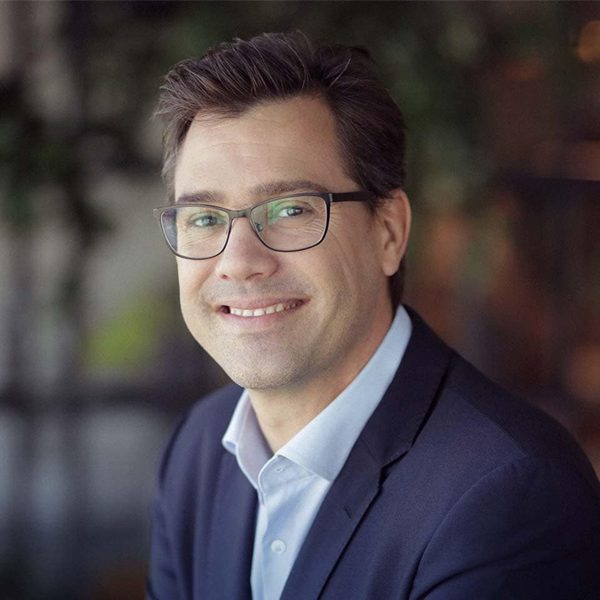
In this episode, we sit down with Yoni Assia, the co-founder and CEO of eToro, one of the world's best-known retail trading and investing platforms. Founded in 2007 with his brother Ronen, eToro was built around the idea of social trading — letting everyday investors follow and copy the trades of people they trust — and has since grown into a network of around 40 million registered users trading some 12,000 assets across more than 70 countries. In May 2025, eToro listed on the Nasdaq in an upsized $620 million IPO that valued the company at more than $4 billion, making it one of the first fintechs to go public since 2021.
With Yoni, we discuss why he always intended to take the company public, the judgment call to price and launch into a volatile backdrop, why he chose to list in the US, what 183 investor meetings taught him about the surprising similarities between institutional and retail investors, the allocation mechanics, and where he sees market innovation heading — from retail participation and IPO-price derivatives to tokenized equities and capital markets moving on-chain.
Disclaimer: The discussion in this episode is not financial advice, nor an investment recommendation, nor a solicitation to buy or sell any financial instruments or an offer for financial services or any other transaction. The information contained in the recording has no contractual value and is intended for informational purposes only. Amundsen Investment Management and the participants in this podcast may have holdings in the companies being discussed. Any views expressed are those of the guests only, and not of Amundsen Investment Management.
Yoni Assia is the co-founder and CEO of eToro, the global social trading and investment platform he co-founded in 2007, which listed on the Nasdaq in May 2025 under the ticker ETOR, raising $310 million at a $4.2 billion valuation.
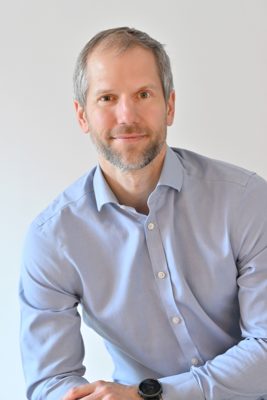
Per is co-founder and CEO of Amundsen Investment Management. Prior to founding Amundsen, Per was Global Head of Equity Enhanced Indexing at Norges Bank Investment Management (the Norwegian Sovereign Wealth Fund), where he oversaw the management of the fund's $700bn equity index portfolio, invested across 9000+ companies globally. Per is an engineer by training, with a Master of Science from Ecole Polytechnique in France and MIT in the US. Per serves as a member of AMF's consultative committee on Disclosures and Corporate Finance, FTSE Russell’s EMEA Regional Advisory Committee, and Euronext Oslo's index advisory committee.
Transcript
Auto-generated
Per: Today we welcome Yoni Assia, co-founder and CEO of eToro, to discuss the IPO journey of one of the world's best-known retail trading and investing platforms. eToro was founded in 2007 by Yoni and his brother Ronen Assia, and is built around the idea of social trading, letting everyday investors follow and copy the trades of people they trust. It has since grown into a platform spanning stocks, crypto, and other assets across more than 70 countries. eToro went public on the Nasdaq in May 2025 in an upsized $620 million transaction, becoming one of the first fintechs to go public since 2021, valuing the company at more than $4 billion. In this episode, we explore the origins of eToro, the decision to go ahead with the IPO despite a volatile backdrop, how they think about growth across trading, crypto, and new bets like tokenized assets, innovations in the IPO process, and key lessons for founders navigating public markets. Before we start, we would like to remind our listeners that our discussion is not financial advice, nor an investment recommendation, nor a solicitation to buy or sell any financial instruments, or an offer for financial services or any other transaction. The information contained in the recording has no contractual value and are destined for information purpose only. Amundsen Investment Management and the participants on this podcast may have holdings in the companies being discussed.
Yoni, thank you very much for joining the podcast today. And, uh, maybe you could tell a bit of your own story and how you came about founding eToro.
Yoni Assia: Sure. So, I'm feeling a bit old to say this, but almost 20 years ago, I started the company with my older brother. I've been passionate about capital markets since I was about 13, so 30-plus years ago. I remember doing my first trade and how impactful was that on my life on falling in love in capital markets. I made a lot of money when I was about 16 during the dot-com bubble, lost a lot of money when I was about 18 with the dot-com bubble burst, and sort of knew from there I wanted to spend my life in finance and the intersection of finance technology. Founded the company in 2007 with my older brother, Ronen Assia. And our vision actually has stayed the same vision statement since we launched the platform, which was open the global markets for everyone to trade and invest in a simple and transparent way. And our vision has always been to help investors find the markets, be able to access the global markets, whether it's US markets or European markets. Today, our customers can trade stocks from 25 different capital markets, whether it's crypto markets or commodity markets. So, our passion has always been to constantly find new, interesting markets, to educate our customers about the markets, and provide for them the technology and the information that they need to succeed in the markets through what is today the largest social investment network. We have about 40 million registered users into our social network where our customers can talk about the 12,000 assets listed on eToro, and where they can actually see the performance of others and copy the most successful investors on the platform.
Per: Yeah, so it's a very innovative model, and I'm not sure anybody has actually, uh, been able to reproduce the, that social investing model that you pioneered. If we go back, when you founded the company, had you already then thought about becoming a listed company at some point? When did that become your plan?
Yoni Assia: I think from almost day one when we raised funds from investors, a relatively early decision for founders who think long-term is the decision between am I doing this company as cash cow, as a dividend play, or am I doing this as an enterprise value play, which then means eventually IPO or M&A, right? And so, we raised $1.7 million at $5 million post-money valuation back in 2007. From that moment, my father told me, "You now have shareholders. Respect your shareholders, and make sure that every single quarter, you issue a statement with your financials, your P&L, balance sheet, and updates about the company." So, I've been running the company like this for, you know, 18 years before going public. And I always knew at some point, I wanted to take the company public because my passion is about capital markets. So, I'm a fan of capital markets. I believe in capital markets and becoming public. At some point, we thought maybe let's issue a token, but I think that was somewhere in 2017, '18. And, and after seeing tokens destroyed by 95%, I think we came back to the realization that capital markets are still the right path for a great company to be able to grow to, you know, $100 billion, and now even a bil- a trillion dollars. Now, when you say, "I want to go to a trillion dollars," it sounds feasible. You have 10 companies that are worth, I think, more than a trillion dollars, and one that was just IPO'd at more than $2 trillion. So, I think that's the power of capital markets, but even more than that, it's the power of US capital markets right now. And, you know, I'd love to see us grow to become a large cap, which is now $100 billion, uh, definition.
Per: Yeah, that's great. I mean, when you started, it was, uh, fintech, and the fintech was not something that was so common, right? Was sort of the time between you founded the company in 2007 and going public in 2025, was that the time the market needed to mature the fintech concept, or how did you think about that?
Yoni Assia: First of all, when we started eToro, the term fintech didn't exist. So, like, when we listed Bitcoin, the term blockchain didn't exist the same, right? So, in many cases, we're very, very good at being first movers and early adopters of new technologies. We had a test, I'd say, or a process of going public through a SPAC in 2021, which was about four years before 2025 when we went public. I think back then, the realization was in 2021 that you can trade on revenue multiples, and the strategy in the VC space was to grow at all costs, right? So, grow your- we grew our marketing budget from $100 million to $200 million to $550 million in 2021. And that was the directive. That was what the market was telling you to do. But we also actually lost money. And then 2022 came in, and we realized that this is a non-sustainable strategy of being a public company because I saw my peers in other companies that went public when they're loss-making, and I saw their stocks go down by 90%. So, we said, "Okay, let's step back. Let's now focus on profitable growth. Let's make sure we understand not only our revenue multiple, but also our EBITDA multiple and our PE multiple, and then let's come back to the market." And I think that's the process that we've done from 2021 to 2025. 2021 really taught us how to report like a public company. So, we already had to do the PCAOB, which is the big four EY auditing process. We already had to sort of figure everything around SOX and making sure that P&L, cash flow, balance sheet are all, as you see, approved by IFRS, right? So, a lot of the processes which are more compliance, regulation, audit, everything like that, we already finished in 2021. And then we had four years to really refocus on the key learnings we had from 2021 from investors, which is to diversify the business. So, we have now five lines of revenues instead of roughly one in 2020, and to look at profitability and the EBITDA margins of each of those five lines of business and the growth trajectory of each of those lines of business. And in 2025, we felt that the company is very mature to be public. 2025 ended with about $870 million top line and $310 million bottom line. So, a very successful year, already in a significant trajectory, right? $300 million-plus profit, I think, is a great place to be as a public company, as a sustainable public company moving forward. Uh, but actually, the story of the IPO itself is more interesting, which is we worked on the IPO probably six months before sort of you flip the switch and you have the prospectus ready, or even nine months. And then I had to make a call, "Do I flip the prospectus public or not?" because we knew Trump is going to talk about something in two days. And I said, "Let's flip the prospectus. I think it's going to be okay." And then tariffs were announced with Liberation Day. The markets dropped, I think, about 30%. And I think this was 7th of April. And, you know, we have a consortium of 17 banks. Goldman is lead left, and they were basically all telling me, "Yoni, there is no IPO. Like, IPOs have windows, and the window is either open and closed. The VIX right now is at 55." I think Robinhood back then dropped from about $80 to $20. They told me, like, "Your comp just went down 75%," I don't know, maybe it was 60%. "VIX is at 55. Until VIX is back at 20, there is no IPO market." And by the way, very lucky because in those two weeks of silence, I got back to coding, which actually completely transitioned the company's focus on APIs and AI because sort of suddenly I was back in the field programming because I had no bankers, no lawyers, no investors to talk to for like two, three weeks. But then we decided to come back to New York. I told Goldman, "I'm staying in New York till the company is public." And somehow, from being like fourth in line to go public, we became the first fintech company to list in 2021, the first Israeli-related company to list since 2021, the first tech company to go out of the gates and IPO since Liberation Day. So, we had this opportunity of actually going first into the market after like a silence of, I think, about six weeks of public markets.
Per: So, as you're saying, sort of the IPO work can be quite intense and, and a bit of a distraction. But if you go back to sort of 2021, 2022, did you have pre-IPO investors that were pushing you to get liquidity, and, and how did you kind of manage those, uh, that have been there from, since the beginning?
Yoni Assia: So, very luckily, all our big investors, including till 2025, are, are very long-time investors in eToro, and most of them have been more permanent capital. So, BRM Group, Spark Capital, the, the Arnov family office, David Tepper, Susquehanna. So, a lot of very large investors that are very experienced in investing both in private and public, but in nature are actually what's called permanent capital, right? So, they can actually continue to invest, and they're not stressed about a liquidity event. So, we didn't feel any pressure going public in 2021 or in 2025. But that's also because, you know, we were very smart about the partners we brought in along the years. We also didn't raise a lot of money until 2021. So, in, in 2021, we raised $250 million. But before that, for the first 14 years of eToro, on a net basis, we only raised $60 million because we raised $160 million but paid $100 million dividend. So, we always had that sort of level of keep profitability in revenues, of course, but also profitability in our sort of core values and not spend or overspend, which I think a lot of founders who get locked up with investors who then pressure them to do something are founders that also raise too much money or too much high valuation, maybe with the wrong preferred structure, and then they're, they're pressured to IPO. Very luckily, we never had that.
Per: But then in terms of your internal pool of talent, and the people working with you, I'm sure some of those also wanted liquidity or sort of seeing something of an exit for their options. Was it a challenge to retain them after, uh, some of your competitors went public, like Robinhood and TransferWise, for example?
Yoni Assia: I don't think so. If you look at the tenure of my management, it's about 14 years. I have two C-levels who are with me for 19 years, another three that are with us for 16 years, another, I think, five that are with us for more than 10 years. So, like, historically, we're actually, or I'm a very big believer in corporate memory. So, while lot of my senior C-levels are doing the same job that they were doing three years ago, I still believe that people have a lot of value for the company if they spend so long in the company and therefore understand so much about the company. So, we have very good retention of our management and key talent. And I think eventually also everybody saw, when you think of Robinhood and Coinbase IPOs in 2021, they all saw that they went down, I think, somewhere between 70% to 80% down. So, I think very fast, people realized that that was the right decision to actually, uh, push the SPAC or terminate the SPAC and wait till we see better markets.
Per: And in terms of your business, you said that you were basically able to diversify quite a lot in the period between '21 and going public in '25. Can you tell us a bit more about sort of the new business lines you added there and how you managed that growth?
Yoni Assia: Sure. So, one of them is sort of crypto versus equities, which, you know, we've always been in between the world of equities and crypto. When you look at our numbers, I think we're the most diverse when you look at how much we have both crypto and equities, right? So, if you compare that to the benchmark, we're the only ones that are roughly 50-50 at times where crypto is up. But when crypto is down, we actually double down on equities. So, first was double down on equities. Let's launch more exchanges in more markets. Let's launch proper support for Euro accounts for European clients, Australian accounts and Australian stocks for Australian clients, UK shares for UK clients. So, we double down on localizing the business in all of our jurisdictions. And because of that, we saw significant scale-up in our core business, which is our capital markets execution and transaction revenues. The second part is, I think in 2019 or 2020, we were at single-digit billions, low single-digit billion. Today, we have at 4 million funded accounts with over $20 billion. So, a big part of that growth in AUA also led us to learn and create new business lines, which are asset-based revenues. So, which are interest rate, which are stock lending and staking, which now represent roughly 25% of revenues of eToro. So, that was a significant unlock because also transaction revenues in capital markets or, you know, in commodities markets, in equities and in crypto, what we found out over the years are complementary because when crypto is down, usually commodities is volatile. And when commodities are less volatile, usually stocks are up or volatile. So, the different lines of revenues of transaction revenues actually compensate for one market is down, another market is up, or the way we like to say it is, there's always something interesting somewhere. And then the fourth significant line of revenues is eToro Money. We launch a partnership with Visa, and we launch local currency accounts, which now represent roughly somewhere between 12% to 18% of total revenues, which is more similar to the company you mentioned before, Wise. So, you as a customer can actually have a Visa debit card in Euro, in your Euro IBAN. You can convert your Euros to dollars in a very, very cost-attractive way, and therefore manage sort of multiple currencies in eToro and actually spend from eToro as well. Uh, the fifth line of revenues was a subscription model, which is the way we look at savings market, whether it's the cash ISA or SIP market in the UK. Through an acquisition, we entered the employer contribution and savings market in Australia. Also, we've launched life insurance in France, and are looking now at launching PE in France and the new pension scheme in Germany. So, expanding more into savings where assets are much higher from a revenue yield perspective, but the opportunity and the stickiness of their assets are much larger as well.
Per: As you're saying, sort of you had a quite diversified business when you, when you came to the market, and you were actually, as you're saying, quite profitable. You already had $300 million in EBITDA, which is, uh, a lot more than a lot of other tech companies can, can say, right? So, the question is then, you raised money at the IPO. Why was that necessary? Was it because you needed to, you still needed to invest in growth, or was it more of a signal to the public market saying, "You are going to grow"? How did you think about the primary component there?
Yoni Assia: As a financial services listed company with $20 billion of customer assets, where I want to grow customer assets to $100 billion and then to a trillion, I think a strong balance sheet is actually something that you want to have in a company where a big part of the process of the IPO was to mature the company. If you think of our customer base, it started with us when they were 25. Now, their average age is 35 or 36. And over the next 10 years, I think the average age is gradually, we see it, it's growing up. And if you look at our biggest clients, which are the diamond clients, so we have a club membership, and the diamond clients are, are those with the most amount of money in eToro, then the diamond clients in eToro usually are at their 50s or 60s. And they have an average account of half a million dollars. Some of them have a million dollars, $2 million. So, the level of trust that we need from our customers scaled up significantly. I believe that by going public, by being transparent and having the also the ability of our diamond clients now to be investors and own eToro shares, and by having a stronger balance sheet that will enable us to also grow in new markets for us like the US and do acquisitions, that all of that together will help us grow the company and grow the company's trust with its existing clients and new clients.
Per: You chose to list in the US, but you're not really a US company, right? You're founded in Israel, your, your client base is mostly non-US. Can you explain why you chose to list in the US, uh, what brought you there? Was it looking for comparables or valuation or liquidity, or was it something about your business saying, "Gaining visibility in the US is good for you, so, uh, makes sense to be listed there"?
Yoni Assia: I would split it to two parts. One is there is no doubt that the US is the largest capital markets in the world. And when you think of a company where, again, my aspiration is to be, you know, from going from 5 to 50 to $100 billion, you rarely see that in other markets. You do see that from time to time with a very, very local company, uh, you know, like in, in ASML or some pharma companies in Europe.
Per: In Europe, you have Adyen, which has been one of the big successes in the fintech space, right?
Yoni Assia: Yeah, but they're Dutch, and they listed in the Netherlands. Right? So, for us, our customers are actually European, right? So, European and British. But you don't have a lot of non-French companies, non-UK companies with UK clients that are trading in the UK, right? So, Wise is a UK company. So, if you look at the local European exchanges, you do have a lot of great examples of big companies, but usually they did it in the local exchange because they're local, right? So, they can meet the local investors, they have this very strong local presence, sometimes local market. And for us also, I thought always also of retail investors, right? So, where do our customers trade stock? They trade US stocks. It could be foreign companies trading in the US, but there's something quite unique like the US market to some extent has become the market of retail investors.
Per: What share of US stocks is the retail investors trading?
Yoni Assia: It's probably 70% US, 30% local. And again, in many markets, we were the first to market commission-free US stock trading and fractional shares. So, many of our customers that are with us even 5 or 10 years remember when we gave them a free stock of $20 of Amazon 10 years ago, which, by the way, they should have held, probably. So, we were first to market cost-effective US shares trading in many markets in Europe, in Australia, in Asia, in the UK. And I think that's a part of sort of why we also we wanted to be public in the largest capital markets. I have to say that in the roadshow, for example, I was amazed by the depth of US capital markets. I met investors who jointly manage $30 trillion. 183 meetings. Of course, I consider like Fidelity and BlackRock, that's 10 and 10, so, you know, it's not that I met the people who manage entire $30 trillion. But, you know, so much companies manage huge amounts of wealth you've never even heard of, right? So, some teachers' association that manages $300 billion, um, you know, out of the Midwest, etc. So, you meet a lot of very interesting investors in the US, which, again, it's a $30 trillion cap capital markets where you just look at the institutional investors who look at IPOs.
Per: All right. It's, uh, definite that, uh, the investor pool is huge. But one challenge some companies face is how do you manage to become visible enough when there are so many thousands of listed companies in the US, right? And you're, you're towards the lower end, even though you're sort of a $3 billion market cap right now, it's still towards the lower end of a US company. How do you feel about that?
Yoni Assia: You know, it's on us to make sure that we grow the business, that we grow our presence in the US, which will eventually lead also to the growth of the multiple of eToro, right? So, it's like in a lot of things I've seen in business in the past almost 20 years, you need to, you know, set your ducks in a row or have your stars aligned to suddenly go from, uh, by the way, market cap is closer to 4, from 4 to 40. So, I think a lot of it is also our US presence. A big part of expectations of US investors is to see us succeed and scale in the US, which is something I believe very much we can and will do in the next 5 years. But, of course, investors want to see eventually us executing against our deliveries and against our IPO promise of continued growth of eToro in the US and in all of the existing markets.
Per: And your interactions with investors, you said you met with 183 investors. Was there a difference in how your interactions were in US investors versus non-US investors? Uh, was there a difference in how they thought about growth, for example, or sophistication?
Yoni Assia: There's definitely a larger pool of growth investors in the US than anywhere outside the US. I think there's no question about that. Second is, interestingly, maybe you would know more about this than I do, there's actually like a very large pool of capital that are purely what they call capital markets, or basically IPO investors. I didn't realize that until very late at the process, which is many of the investors I met who were talking to me for 6, 9, 12 months, gaining interest, asking questions, being in the test-the-waters process, were actually just doing that for buying the stock and selling it in the same day. That was for me a surprise, how big of a capital allocation do you have for people who actually sort of are looking for the single-day alpha, and nobody's willing to tell you about it. So, that's definitely something that you learn throughout the IPO process is that there are whales, there are sleepy giants, and there are IPO chasers who are no different than crypto traders, who are looking just for short-term alpha. We saw a lot of differences. I think the, those specialized one we saw only in the US. Outside the US, we met with asset managers in, in Europe, uh, you know, the style of Amundi or Norges. We met with great investors in the UK. I believe I met you guys as well, and you're part of the IPO as well. So, disclaimer. So, we met a lot of asset managers across the globe. I think those specialized ones are the ones who like surprised us at scale in the US.
Per: So, the IPO was a big success. You had a, uh, $15 pricing, you traded up 29% on day one. That's seen as a success. We had, uh, SpaceX plus 20% on day one as well, so, a higher return on day one, I guess. But some would say, "Okay, this is money left on the table. You could have priced the, the deal higher, so you're leaving a bit of money on the table for the pre-IPO investors." How did you think about that?
Yoni Assia: I think about this in the long game, right? So, in the long game, as a private company, I say this to the founders always, your job as a founder and a CEO is to make sure your investors make money. And while you can always try and be greedy, I highly recommend other founders also not to go to a point where you over-optimize the present or an opportunity over the potential downside in 6 months or 12 months or 18 months. So, I think we were smart and cautious about pricing. I think first-day pop is more market dynamics than anything else. So, you have a lot of, a lot of appetite, a lot of people who are pumped up to buy the stock in day one. We just saw it with SpaceX IPO, which were very kind for retail investors. And I think, you know, I was there, by the way, was mind-blowing. One of the key moments of my life, being on the trading floor with, by the way, a guy who just took a picture with SpaceX. And in SpaceX, if you see, they all have SpaceX sneakers, and he's wearing SpaceX sneakers. That is the same guy in the same team who, and the same desk where basically I opened the first trade. So, super exciting. And you see that pumped-up demand for the first-day pop. I think that's how US markets just operate, building a lot of FOMO during the prospectus. You know, we brought in $10 billion demand to a $500 million deal, right? So, I came into the IPO knowing already I have more than $500 million from the test the waters. And now I'm starting 160 meetings and catching private jet to places to basically bring in more and more and more that eventually are like calling me and calling Goldman and asking for, "Give us more allocation. Give us more allocation. We want more allocation." And then the entire story is who gets the allocation, and how do you make sure the people who get the allocation are not those who necessarily sell, you know, at the first day or first quarter, etc. So, I think, you know, you learn a lot about dynamics of IPOs. At the end of the day, we had great investors who made a lot of money, right? So, think $5 million to $5 billion, that's a great ride for those who, who have been with us for 18 years. And I think at the end of the day, stock follow the business. And our business is growing. We had four consecutive beats since going public. And I think the business, by the way, follows a great product and customer satisfaction, or business strategy, right? So, I think we have the right business strategy. We have great clients. We have, uh, coming soon a lot of products coming to the markets.
due to the acceleration of AI, and my belief is more customers that eventually spend and invest and trade with more money on eToro and are happy with our products, uh there are both innovative and as we scale we build on more trust, that's what builds eventually a stronger and resilient business, which leads to eventually higher stock and a higher stock multiples.
Per Einar Ellefsen: Since the IPO and since that first day pop, the share price is down quite a bit, trading around sort of 40 $40 now, even though you've had a great growing business, right? You had a 10% CAGR since you listed, 25% growth in profits. Is it frustrating for you, the public markets, how they treat newly listed companies or?
Yoni Assia: I think because I've been in capital markets, like remember the origin story is I'm 13, I start to trade, I make $300,000, I even trade options, I remember going to the bank and signing like a 400-page document for my father so they let me trade derivatives when I was 16. I write an options calculator, I think I'm smarter than everybody else because I made already $300,000 when I'm like, I don't know, 17. Then the bubble burst and I lost 90% of that, because you think you're smart, you're making money, you increase your risk, and when you increase your risk and the market changes, it could burn. And then I go into eToro, I go into crypto, I ride, this is my fourth crypto rally. I think I've seen so much volatility in the markets across time to not be frustrated from the short-term markets and how they think about the stock. I think the places where I'm learning, I'm learning how to read what the markets want from you and what is missing for the markets to appreciate more the company's strategy and their belief in our long-term growth, right? So I'm not frustrated about why is the stock down or up a day this or day that. I want to learn why do our great investors, right, what do they think we need to do to be a better company, a greater company, and I think that's a very good process, right? So you learn from very smart people. I'm meeting a lot of very smart people on the investment side. Every quarter we have now, I think, 17 analysts or 16 analysts covering us. So like every month I get an update from my business and I read smart people and their view of our business, and they compare our business to our benchmarks and we learn from that. So I think that process of learning and how to improve yourself in the presence of analysts, in the presence of investors, I think that's an iterative process that sometimes take time, by the way, especially with, I'd say, companies who are a bit more volatile, right? So our business is still dependent on capital markets, on commodities markets, on crypto markets, on our ability to scale revenues over time to move into mid-cap, right, so to shift into the larger ETFs, though a lot of external dependencies. I think I saw that as well, so I saw, again, Coinbase and Robinhood dropping 70 to 80% in 2022, and I saw IBKR, by the way, who had very bad, to I think it was 2006 to 2016, which weren't that great, or E-Trade before they were bought by TD. So I've been in the market for a long period of time following the companies that I admire. You know, we grow eToro to be bigger than them, and therefore I expected that volatility, and I hope to see that volatility in the right direction going towards $100 per share and then $500 per share.
Per Einar Ellefsen: I think it's great because you're saying you're not afraid of volatility and you're basically take the long-term view of what your own company is worth, right? Which I think is important both as a CEO and as an investor. To can't always say the market is right and taking this view. I mean, you've been enthusiast, you've been trading, as you're saying, for a very long time yourself. The IPO, has it changed how you view the market now being on the sort of the CEO side?
Yoni Assia: It's a great question. I think it tilted me more even to understand how much retail investors and institutional investors are actually the same. So the IPO process where I met 180 people, it felt for me like being in a diamond event of eToro, right? So it's the same people, just in different seats and a better cloth, right? So the hedge fund managers felt to me like the crypto traders and the leverage traders that I meet in eToro. They're chasing alpha, they're chasing an opportunity. The sleepy giants felt for me like people who I know in eToro, they like to deposit $5 billion, they buy five stocks, they don't want to talk to anybody, they just want to look at their stocks once in a while. And, you know, some of the more sophisticated investors felt to me like our PIs, like our pro investors in eToro. So when I saw how Fidelity are thinking and T. Rowe are thinking, I met people who I'm like, hey, these are our pro investors. These are people who wake up, you know, in the middle of the night to analyze the markets, look at the markets. So I actually realized that the retail market is sort of very, very similar, just much larger numbers of the institutional market with different biases. And the bias that I figured exist there is a bit the fear of loss, right? So when you are a retail investor, your fear of loss is your own sense of fear of loss, where when you're an institutional investor, your fear of loss is your fear of your job, which is something a bit different. So I saw that gap between the ability of retail investors, like same type of people, same type of strategies, but our customers are actually much more agile and flexible in both of the risk appetite and their ability to adapt to different strategies, different markets, right? So you also find out that, you know, you meet people and their entire job is, I'm the ETF portfolio manager of this thematic, I need to decide whether you're in this theme called fintech small-cap, where a retail investor in eToro can basically wake up in the morning and say, I just saw that eToro added Japanese stocks, let me run the agent of eToro to find out what are the top five Japanese stocks to buy right now.
Per Einar Ellefsen: I think this is very interesting. It also goes into the topic I wanted to talk to next, which was innovation in the IPO process, because you've been through it. In the end, you've been through a quite traditional IPO in a way. You went through the US market, global banks, mostly institutional investors, and as you had the retail tranche, but I'm just wondering, how do you think the IPO process could be different and maybe involve more retail investors who, as you're saying, are quite eager to look at new new stocks?
Yoni Assia: First of all, I think that, you know, we're just like a week after roughly the SpaceX IPO, which was the the biggest event, biggest IPO ever in history with the highest retail demand ever in history. Uh we were amazed, by the way, by their commitment to retail investors. So the retail investors in eToro in the UK got 80% fill, which is mind-blowing, right? Usually retail investors are like at 5% fill. We were at 80% fill, which I thought was really amazing because it's a commitment to retail. By the way, they did it also very smart. They looked at the smaller investors and actually filled the smaller investors first, like up to a certain cap, and then beyond that cap, your fill rate like dropped significantly. So they wanted a diverse audience of a lot of investors. And in our IPO process, you know, this is funny, but I would say the innovation I brought to the table was a Google spreadsheet. I brought in a Google spreadsheet where I forced the banks to use my Google spreadsheet to decide on allocations, because I told them like, hey, guys, I can't believe you're not sharing allocations with one another, right? So the entire process of an IPO is a very odd one, because the banks are not really sharing information with each other, because everybody wants to claim they're the one who brought the investor. So they need to cooperate, but they're also competitors and they're also competing, and you as the IPO company, you actually need to figure out like, who do I want to allocate to? Who are the right people to be on my shareholder base, because at the end of the day, you are the product. But the famous saying is, if you're not paying for the product, you are the product, about social networks and basically free internet products. So in Wall Street, even when you pay a lot for the product, you're still the product.
Per Einar Ellefsen: And in terms of of retail, what are you doing at eToro to to get retail to participate more actively in in IPOs?
Yoni Assia: So SpaceX was really by far the best retail execution IPO we've ever seen. You know, we've built very fast today with AI. We had a great like landing page, how do you participate, you could put in the order as they started the roadshow. Uh we actually launched something which we're now going to expand, which is like three days before the IPO, we launched a derivative on the IPO price. So you could actually trade SpaceX IPO price before the IPO, which is an awesome product, and we plan to launch that soon, hopefully on Anthropic and OpenAI. So you're seeing also crypto markets sort of mimicking the interest of what's coming in capital markets as well. And uh, you know, we've never seen also that level of interest. We are already past a billion dollars in volumes on SpaceX shares on eToro.
Per Einar Ellefsen: And for future companies going public, do you think SpaceX was was definitely pushing the retail angle quite heavily, and I think uh they did so very successfully. But for most companies, it's a bit tricky because they feel maybe they're not a very consumer-facing brand, they don't uh necessarily want to engage so much with retail investors. Do you think there's a room for them as well to go on eToro and other uh retail platforms to to get more investors?
Yoni Assia: Yeah, I think you have to be to some extent with a retail audience. So if you're a completely unknown brand, I don't think there's a lot of reason for retail investors to find, right? So if you're a B2B SaaS company that's small to mid-cap, I'm uncertain how big this could be. If you are a company with a significant audience, then definitely you should look at what the banks are offering to actually bring in more retail customers and increase your retail customer base.
Per Einar Ellefsen: If you can think back on the IPO process yourself from a founder's perspective and from having had multiple experiences with IPOs yourself, how would you have liked to see it? You said you would have liked to see more collaboration between the banks to to get them to share. Is there anything else that you would have liked to see in the process in order to to get the best possible um investor base?
Yoni Assia: I think that the investor base was great. I mean, I really enjoyed the roadshow. I learned a lot on the roadshow. I think that, you know, people maybe should tell you more about who are the investors who are there for long-term versus short-term. So I think some of the reasons that the IPO markets work the way they are is for those alpha chasers, which are, I'd say, a bigger part of the IPO market in the US. I think that technology, by the way, was quite cool. So we got like an app from Goldman where, you know, every time somebody put in an order, I got like, blip blip, I got uh another 50 million, 50 million, 50 million, 50 million. So that was cool.
Per Einar Ellefsen: Was that with the name of the investor or was it just the the size of the order?
Yoni Assia: No, no, with the name of the investor.
Per Einar Ellefsen: Okay, so you you could actually track, you met the people in the in meetings and you could track if they put in an order or not.
Yoni Assia: So it was very cool. Like, I'm finishing a meeting with a very large investor, we spoke to them many, many, many times, 15 minutes after the meeting, we're like, another $100 million coming from, and like, wow, that's very cool. So yeah, I think uh all in all, it's a great experience. It's not a technology-led experience, it's very human-led. It's a lot of meetings, but I think that's just the way it is. I think, you know, if you could create better machinery for it, you could probably make it more efficient and potentially pay less fees, so it's probably the way that the capital markets will continue to work.
Per Einar Ellefsen: Do you think there's a room for IPOs being done on blockchain, like we had these ICOs, you said you you considered it yourself, but maybe in a new version, is that something uh you think is is a potential future innovation?
Yoni Assia: I definitely think that there's an opportunity to significantly improve how you do these IPOs, how you use blockchain technology, and I think we're we're seeing it on smaller scale, right? So tokens are being issued, 40,000 tokens on Solana are being issued every day. There are 10,000 ultra-micro-cap tokens out there already, and quite a few $10 billion plus market cap coins out there. So I would say that crypto markets are a parallel universe to capital markets, and at some point, those markets start converging. That some point is very soon, because suddenly you have things like Canton and Digital Assets Groups and tokenized equities, we're tokenized equities, you're seeing the chairman of the SEC say that he expects to see uh more capital markets going on-chain and potentially the largest clearing member in the US offering tokenized equities. So when all of that happens, you will have blockchain technology and on-chain technology coming to capital markets. So I definitely see this coming to the markets. The biggest hurdles will always be sort of, how do you set up local regulatory environment and then a global regulatory environment.
Per Einar Ellefsen: Well, thank you very much, Yoni, and uh best of luck with uh many years ahead of you as a as a public company.
Yoni Assia: Thank you very much, appreciate it.
Per Einar Ellefsen: Thank you for listening to IPO Stories. In future episodes, we'll host CEOs, CFOs, advisors, and other participants in the IPO process to learn from their experience. Look of Amundsen today. If you like the show, please follow us on Spotify or Apple Podcasts and share the show with people around you. If you have questions about the IPO process that you'd like us to address with future guests, you can reach us on LinkedIn. Follow LinkedIn account Amundsen Investment Management.